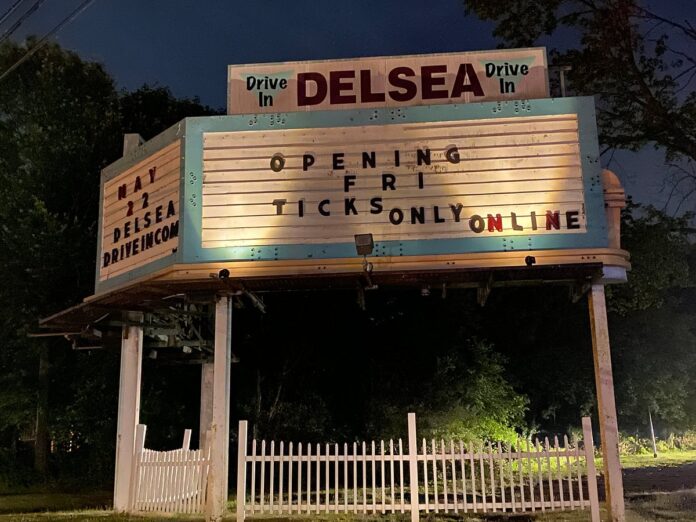

New Jersey’s place in film history is not just a matter of production credits or studio investments—it is foundational. The very first drive-in movie theater in the United States opened in Pennsauken in 1933, introducing a uniquely American way to experience cinema that blended technology, community, and open-air freedom. Nearly a century later, that legacy lives on in a single, enduring location. The Delsea Drive-In Theatre in Vineland, the last remaining drive-in in New Jersey, has officially opened its gates for the 2026 season, reaffirming its role as both a cultural landmark and a living piece of entertainment history.
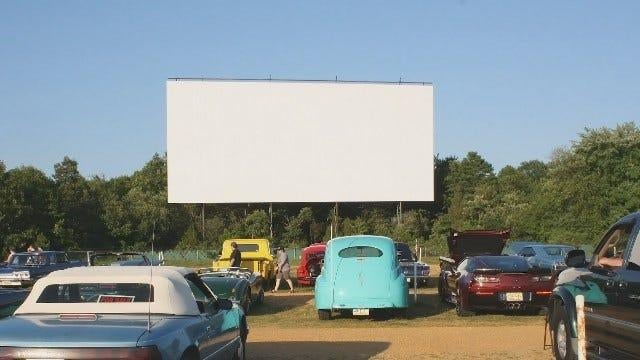
As of Friday, April 3, 2026, the screens are once again illuminated, marking the return of a tradition that continues to resonate with audiences seeking something more than a conventional movie night. Located at 2203 South Delsea Drive, just south of Cumberland Mall, the theater offers a rare experience—one that combines nostalgia with accessibility, and simplicity with a sense of occasion.
The Delsea Drive-In operates on a focused early-season schedule, welcoming guests on Fridays and Saturdays, with box office hours running from 6:15 PM through 10:45 PM. Shows begin at approximately 7:45 PM, timed to align with the natural transition from daylight to evening, when the atmosphere shifts and the screens become the focal point. Every ticket, priced at $14.97, includes access to a double feature on one of the theater’s two screens, reinforcing the value and tradition that have long defined the drive-in experience.
Opening weekend programming reflects a deliberate balance between broad appeal and variety. Screen one features family-oriented selections, pairing The Super Mario Galaxy Movie with Goat, both rated PG and positioned to draw younger audiences and families. Screen two offers a more diverse lineup, combining the science-driven narrative of Project Hail Mary with the intensity of Crime 101, catering to viewers seeking a more layered cinematic experience. This dual-screen format allows the theater to serve multiple audiences simultaneously while maintaining the communal energy that defines the venue.
What distinguishes the Delsea Drive-In is not just its programming, but the way in which that programming is delivered. Guests remain in their vehicles, tuning their car radios to designated frequencies to receive audio—a method that preserves the authenticity of the drive-in format while ensuring modern clarity. It is a system that feels both retro and functional, connecting today’s audience with a format that has remained largely unchanged for decades.
The theater’s commitment to authenticity extends beyond the screening itself. The concession stand plays a central role in the overall experience, offering a menu that goes well beyond traditional movie snacks. While classic items are available, the inclusion of options such as pierogies, shrimp kabobs, and spring rolls reflects a broader approach to food service—one that recognizes the importance of variety and quality in enhancing the evening. For those who prefer to bring their own food and beverages, a food permit option is available, reinforcing the theater’s flexible and customer-focused model.
Pets are also welcome on both operating nights, adding another layer of accessibility and reinforcing the drive-in’s identity as a community-oriented destination. It is this combination of flexibility, tradition, and thoughtful adaptation that has allowed the Delsea Drive-In to remain viable in an era where most of its counterparts have disappeared.
The history of the theater itself adds further depth to the experience. Originally constructed in 1949, the Delsea Drive-In operated for decades before closing in 1987, a casualty of shifting entertainment habits and the rise of indoor multiplexes. Its revival in 2004 marked not just a reopening, but a restoration of a cultural artifact—one that has since been maintained with care and purpose. Today, it stands as the only drive-in in New Jersey, a distinction that carries both significance and responsibility.
That responsibility is reflected in the theater’s ongoing effort to balance preservation with relevance. While the core format remains unchanged, the programming, amenities, and operational strategies have evolved to meet contemporary expectations. This adaptability ensures that the drive-in is not simply a relic, but an active participant in the state’s current entertainment landscape.
Within the broader context of New Jersey’s film and television ecosystem, the Delsea Drive-In occupies a unique position. As the state continues to expand its presence in production and media, with increasing investment in studios, locations, and creative infrastructure, venues like Delsea serve as a reminder of where that story began. They connect the past to the present, offering a tangible link to the origins of an industry that continues to evolve.
For those exploring the full scope of New Jersey’s film and entertainment offerings, from historic venues to contemporary productions, additional coverage and insights can be found through Explore New Jersey’s film and TV section, where the state’s role in shaping and supporting the industry is documented in detail.
The reopening of the Delsea Drive-In for the 2026 season is more than a seasonal milestone—it is a reaffirmation of the enduring appeal of shared, outdoor experiences. In a time when entertainment is increasingly individualized and digital, the drive-in offers something different: a collective moment, experienced under an open sky, where the boundaries between audience and environment are intentionally blurred.
For families, it provides a setting that is both relaxed and engaging. For film enthusiasts, it offers a connection to cinematic history. For New Jersey, it stands as a symbol of continuity—a reminder that even as the industry advances, there is lasting value in preserving the experiences that defined it.
As the screens light up once again in Vineland, the message is clear. The drive-in is not just surviving—it is continuing, adapting, and inviting a new generation to experience cinema in a way that feels both timeless and uniquely its own.