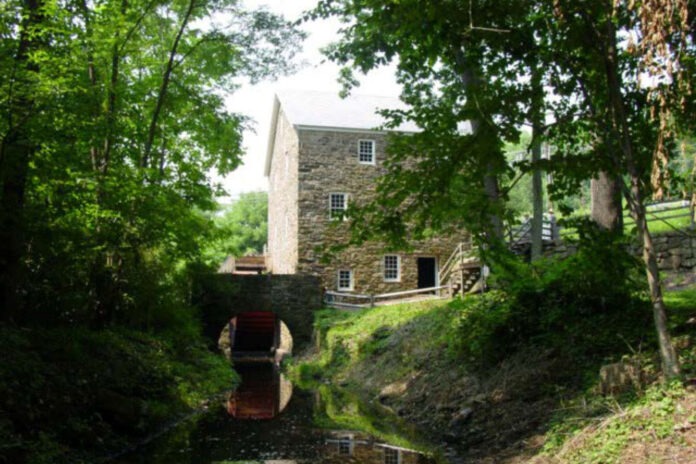


New Jersey’s rich historical landscape comes vividly to life once again as the Cooper Gristmill prepares to reopen for the Spring 2026 season, welcoming visitors to experience one of the state’s most remarkable preserved industrial landmarks. Nestled along the scenic Black River in Chester Township, the historic water-powered flour mill offers an immersive journey into early American industry, regional heritage, and environmental stewardship.
Built in 1826 by retired General Nathan Cooper and listed on the National Register of Historic Places, the Cooper Gristmill stands as one of the few remaining operational gristmills in New Jersey. Its reopening marks not simply the return of a seasonal attraction but the revival of a living museum where history, technology, and nature converge.
As New Jersey continues to prioritize preservation, environmental awareness, and cultural heritage — values reflected across initiatives highlighted in the Humane State — the Cooper Gristmill represents a powerful example of how historic preservation strengthens community identity while promoting education and sustainability.

A Living Museum Along the Black River
The Cooper Gristmill offers visitors a rare opportunity to witness 19th-century industrial technology in action. Unlike static historic sites, the mill remains fully operational, demonstrating traditional grain grinding methods powered entirely by the natural energy of flowing water.
The restored structure captures the spirit of early American innovation, showcasing how communities once harnessed natural resources to support local economies. Positioned along the Black River’s rushing waters, the mill continues to operate much as it did nearly two centuries ago.
Visitors begin their experience at the site’s visitor center, where exhibits explore the history of the region, the former village of Milltown, and the broader industrial development that shaped Morris County. From there, guests embark on guided tours of the working mill, offering a dynamic look at historical engineering and craftsmanship.
Spring 2026 Season Opening Details
Following its winter closure, the Cooper Gristmill is scheduled to reopen for general visitation in Spring 2026, continuing its tradition as one of New Jersey’s most accessible and engaging historical destinations.
Standard seasonal operations typically include:
- Season Dates: April 1 through October 31
- Operating Days: Fridays and Sundays
- Hours: 10:00 AM to 4:00 PM, with last admission at 3:00 PM
- Admission: $5.00 per person
The affordable admission and limited operating days help preserve the site’s historic integrity while providing an intimate visitor experience.

Guided Tours Led by a Master Miller
A defining feature of the Cooper Gristmill experience is its immersive guided tour program. Visitors are led by a master miller dressed in period costume, providing a detailed explanation of the mill’s operation, history, and technological evolution.
During the approximately 45-minute tour, guests learn about:
- The daily life of early mill workers
- The development of the Milltown community
- The mechanics of water-powered machinery
- The importance of milling to regional agriculture
- The evolution of industrial technology
This interactive approach transforms historical education into a vivid, hands-on experience.
Witnessing the Power of Water-Driven Engineering
At the heart of the mill’s operation is a remarkable demonstration of historic engineering. Visitors can observe a massive six-ton steel waterwheel that harnesses the energy of the Black River to power enormous millstones.
Key operational features include:
- A six-ton waterwheel converting river flow into mechanical energy
- Two thousand-pound millstones grinding grain into flour
- Production capacity of up to 800 pounds of flour per hour
- Fully restored machinery operating in real time
The experience offers a striking reminder of how early industries relied on renewable natural power long before modern sustainability movements emerged.
Stone-Ground Flour and Traditional Craftsmanship
Visitors to the Cooper Gristmill can also experience traditional food production methods firsthand. Fresh stone-ground cornmeal and flour produced during demonstrations are available for visitors to take home in exchange for a donation.
This tangible connection to historical craft reinforces the mill’s role not just as an educational space but as a working example of traditional manufacturing.
A Gateway to Outdoor Exploration
The Cooper Gristmill’s appeal extends beyond historical education. The site serves as a trailhead for Patriots’ Path, a multi-mile trail system that connects visitors to some of Morris County’s most scenic natural landscapes.
The trail network links to:
- Willowwood Arboretum
- Woodland hiking routes
- Scenic river views
- Regional conservation areas
This integration of history and nature aligns with New Jersey’s broader commitment to environmental preservation and public access to green spaces.
A 19th-Century Industrial Powerhouse
During its peak in the 19th century, the Cooper Gristmill was considered a state-of-the-art industrial facility. At its height, the mill could grind as much as 10 tons of grain daily, serving as a vital economic engine for the surrounding region.
Its technological sophistication demonstrated the growing importance of mechanized production during America’s early industrial period. The mill helped support local agriculture, trade, and economic development throughout Morris County.
Technological Innovation and Adaptation
The mill’s history reflects the constant evolution of industrial technology. Originally powered by wooden overshot waterwheels, the facility was modernized in the 1870s with more efficient horizontal turbines in an effort to remain competitive with large-scale Midwest milling operations.
These upgrades illustrate the broader industrial transformations that shaped American manufacturing during the late 19th century.
Preservation and Restoration Efforts
After ceasing operations in 1913, the mill stood as a relic of a bygone era until the Morris County Park Commission acquired the property in 1973. Through extensive restoration efforts, the structure was transformed into a fully operational living museum.
The preservation of the Cooper Gristmill represents a major achievement in historic conservation, ensuring future generations can experience authentic industrial heritage.
Cultural Heritage and Community Identity
The reopening of the Cooper Gristmill reflects a broader cultural commitment to preserving New Jersey’s historical landmarks. Sites like the mill provide essential opportunities for public education, community engagement, and cultural continuity.
By maintaining operational historic spaces, New Jersey reinforces its identity as a state deeply connected to its past while fostering appreciation for traditional craftsmanship and innovation.
Educational Value for All Ages
The mill’s programming offers valuable learning opportunities for students, families, and history enthusiasts. Through hands-on demonstrations and guided interpretation, visitors gain insight into engineering principles, environmental science, and economic history.
Educational themes explored at the site include:
- Early industrial technology
- Renewable energy applications
- Agricultural history
- Regional development
- Conservation and preservation
This multidisciplinary approach makes the Cooper Gristmill a vital educational resource.
Environmental Sustainability and Historic Technology
The mill’s reliance on water power also highlights early examples of renewable energy use. Long before modern sustainability initiatives, communities utilized natural forces such as river currents to power essential industries.
Today, the site serves as a reminder of the enduring relationship between human innovation and environmental stewardship.
A Timeless Experience in the Garden State
As the Cooper Gristmill prepares to welcome visitors for the 2026 season, the historic landmark continues to offer one of New Jersey’s most immersive cultural experiences. Combining industrial heritage, environmental awareness, and community engagement, the site provides a powerful connection to the state’s past while enriching its present cultural landscape.
For visitors seeking to explore New Jersey’s living history, the reopening of this iconic water-powered mill offers a unique opportunity to step inside the machinery of the past and experience the enduring legacy of innovation that helped shape the Garden State.