
Bergen County’s cultural calendar takes a powerful turn this March as the Bergen County Historical Society presents A Celebration of Women’s History at Historic New Bridge Landing. The centerpiece of the afternoon is a live performance of Margaret’s Diary During a Revolution, written and performed by acclaimed historian and playwright Gayle Stahlhuth, staged at 2:30 p.m. inside the state historic 1752 Steuben House.
Originally scheduled for February 22, 2026, the event has been rescheduled to March 8 due to snow — an adjustment that now places it squarely within Women’s History Month, adding deeper resonance to an already compelling program.
For Explore New Jersey readers who follow the state’s art and culture scene, this event exemplifies how live performance, archival storytelling, and immersive historic environments converge to bring the past into sharp contemporary focus.
A Revolutionary Voice: The Story of Margaret Morris
At the heart of the afternoon is Margaret Morris — a widow with four children living in Burlington during the American Revolution. On December 6, 1776, Morris began recording detailed entries in her diary as Hessian forces advanced into New Jersey.
While many fled in fear of invasion, she stayed.
She observed.
She documented.
She preserved her perspective in real time.
Margaret’s Diary During a Revolution transforms those writings into living theater. Through Gayle Stahlhuth’s performance, audiences step directly into the emotional and political tension of late 1776 New Jersey. The production does more than recount events; it restores agency to a woman whose firsthand account provides invaluable insight into civilian life during wartime.
The performance underscores an essential truth often overlooked in traditional Revolutionary narratives: women were not passive observers. They were record-keepers, caretakers, strategists, and witnesses to upheaval.
In staging this performance within the Steuben House — itself a site steeped in Revolutionary history — the Bergen County Historical Society reinforces the power of place in historical interpretation.
The 1752 Steuben House: History as Living Architecture
Located at Historic New Bridge Landing in River Edge, the Steuben House stands as one of Bergen County’s most significant surviving 18th-century structures.
Its walls have witnessed: Military movements during the American Revolution, Colonial domestic life, Shifts in New Jersey’s political landscape
Hosting Margaret’s Diary During a Revolution within this setting is not incidental. The architecture becomes a silent collaborator in the storytelling, reinforcing the authenticity of the lived experience being portrayed.
For visitors exploring New Jersey’s art and culture offerings, this fusion of site-specific performance and archival material represents one of the most immersive historical programming models in the state.
New Exhibits Spotlight Women Who Shaped Bergen County
Beyond the featured performance, guests will encounter new exhibitions on display inside the Steuben House, including Women Who Made a Difference in Bergen County. These curated installations highlight the often underrepresented contributions of women in shaping the region’s civic, social, and political development.
In addition, Revolutionary War artifacts and other objects from the society’s extensive collection are available for viewing, offering tangible connections to the stories explored on stage.
Together, the performance and exhibits create a multi-layered educational experience that appeals to historians, students, families, and cultural enthusiasts alike.
Living History in Action: Jersey Dutch Culinary Traditions
The programming extends beyond static exhibits.
Visitors can step into the society’s authentic Jersey Dutch out-kitchen, where interpreters will be cooking a roast over a pot of root vegetables and baking traditional thirded bread. This live culinary demonstration connects attendees to the region’s colonial foodways, illustrating how daily life unfolded in 18th-century Bergen County.
Seasonal refreshments will also be available for purchase inside the tavern, offering guests an opportunity to linger and engage more deeply with the site’s atmosphere.
These experiential components reinforce Historic New Bridge Landing’s commitment to active interpretation rather than passive display.
Family-Friendly Activities and Interactive Exploration
The Bergen County Historical Society has designed the afternoon to be welcoming across generations.
Families can participate in Weaving potholders using traditional techniques & a QR code-based scavenger hunt that guides visitors through the 13-acre landmark site using cell phones
This balance of tactile crafts and digital engagement reflects a thoughtful approach to audience development — honoring tradition while embracing modern accessibility tools.
Visitor Information and Accessibility
Free parking is available on site. Visitors may also take NJ Transit’s Pascack Valley Line to the “New Bridge Landing” station, making the event accessible to those traveling by train.
Dogs are permitted on site when leashed, though not inside the historic houses.
For ticket reservations and complete event details, attendees are encouraged to visit the Bergen County Historical Society’s official website.
Looking Forward: A Capital Campaign for the Future of History
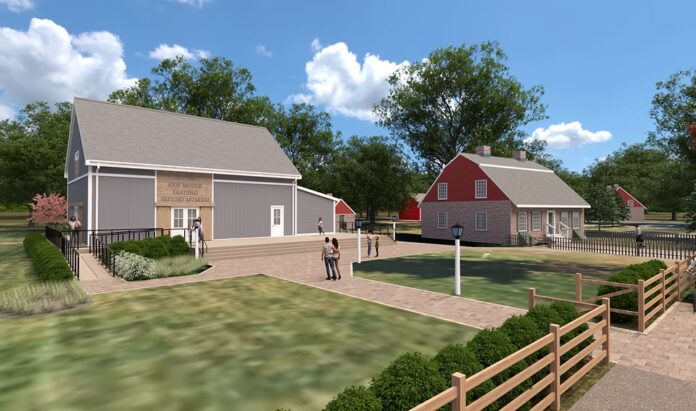
This celebration arrives at a pivotal moment for Historic New Bridge Landing. The Bergen County Historical Society’s capital campaign is actively underway to construct a 3,750-square-foot state-of-the-art Visitor Center that will serve as the gateway to the 13-acre landmark site.
The new facility aims to Introduce guests to the site’s enduring significance, Enhance educational programming capacity, Improve visitor flow and accessibility, Support expanded exhibition opportunities
Historic New Bridge Landing is widely recognized for its pivotal role in The American Revolution, Jersey Dutch colonial history, The histories of Indigenous peoples, The lives of enslaved individuals, free Black residents, and indentured servants connected to the site
The proposed Visitor Center will allow the society to present these interconnected narratives with greater depth and inclusivity.
Community members are invited to contribute to the campaign and help shape the next chapter of Bergen County’s historical preservation efforts.
Why This Event Matters in 2026
Women’s History Month provides an annual opportunity to examine how historical narratives are constructed — and who is included in them.
By centering Margaret Morris’s diary within a live theatrical framework, the Bergen County Historical Society challenges audiences to reconsider the Revolutionary era through a civilian woman’s lens. In doing so, it strengthens public understanding of how history is recorded, remembered, and interpreted.
For Explore New Jersey readers invested in the state’s art and culture landscape, this event stands out for its layered execution:
• Live theatrical storytelling grounded in primary sources
• Authentic 18th-century architectural setting
• Curated exhibits spotlighting regional women leaders
• Interactive culinary and craft demonstrations
• Digital scavenger hunt engagement
• Active preservation and expansion initiatives
Historic programming of this caliber reinforces Bergen County’s reputation as a cultural anchor within New Jersey.
On March 8, as visitors gather at the Steuben House, they will not simply attend a performance. They will enter a conversation across centuries — one that elevates women’s voices, honors regional heritage, and affirms that history remains alive when communities commit to telling it fully.