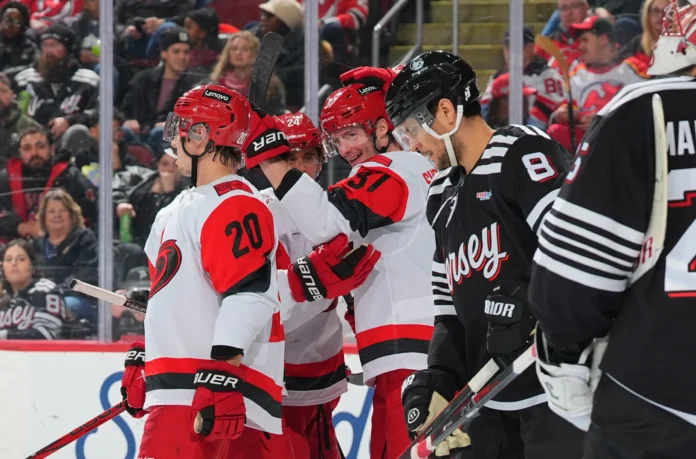

What unfolded on Saturday night was not merely a loss in the standings for the New Jersey Devils, but a stark reminder of how narrow the margin remains between contention and frustration in the Metropolitan Division. Against a Carolina Hurricanes team that has repeatedly caused problems for New Jersey in recent seasons, the Devils struggled to dictate pace, manage momentum, or consistently solve a disciplined, structured opponent. The 4–1 result reflected more than a single off night; it highlighted recurring challenges that continue to surface when the Devils face elite, systems-driven clubs.
From the opening minutes, Carolina imposed its identity. The Hurricanes’ relentless forecheck disrupted New Jersey’s breakout attempts, forcing hurried decisions and limiting the Devils’ ability to generate controlled zone entries. While the Devils managed flashes of speed and creativity, those moments were isolated rather than sustained. Carolina’s ability to compress the neutral zone made it difficult for New Jersey’s skill players to find space, turning what should have been a fast, transition-based game into a grind along the boards.
Defensively, the Devils found themselves under extended pressure far too often. Carolina’s puck movement and cycling game kept New Jersey hemmed in its own zone, taxing the blue line and exposing breakdowns in coverage. The Hurricanes consistently won battles below the goal line, creating second and third chances that eventually translated into goals. Even when the Devils’ goaltending made initial stops, rebounds and loose pucks became an issue, allowing Carolina to capitalize on sustained offensive zone time.
Offensively, New Jersey struggled to generate high-danger opportunities. Shots came, but too many originated from the perimeter, playing directly into Carolina’s defensive strengths. The Hurricanes’ layered coverage neutralized slot chances and limited net-front traffic, leaving the Devils without the kind of greasy goals often required to swing momentum in tight games. When New Jersey did push, Carolina responded with quick clears and immediate counterpressure, preventing any prolonged offensive rhythm.
Special teams, often a swing factor in divisional matchups, failed to provide a lifeline. The Devils’ power play lacked urgency and cohesion, with puck movement slowing just enough for Carolina’s penalty killers to reset and close lanes. Entries were contested, setups were disrupted, and the unit never fully threatened to change the complexion of the game. At even strength, Carolina’s execution remained cleaner and more decisive, reinforcing the gap between a team that thrives on structure and one still searching for consistency.
The psychological element of facing a familiar nemesis also loomed large. Carolina has become something of a measuring stick for the Devils, and Saturday’s contest reinforced how uncomfortable that matchup can be. The Hurricanes’ composure under pressure contrasted sharply with New Jersey’s occasional impatience, particularly when trailing. Forced plays crept into the Devils’ game, leading to turnovers that only fueled Carolina’s transition attack.
For New Jersey, the implications extend beyond a single loss. In a tightly packed division, games against direct rivals carry added weight, not only in the standings but in confidence and identity. The Devils have shown this season that they can skate with top teams, but performances like this underscore the need for sharper execution, especially in puck management and defensive-zone detail. The blueprint to challenge teams like Carolina exists, but it requires discipline over sixty minutes, not just stretches of inspired play.
As the season progresses, these lessons will need to translate into adjustments. The Devils’ roster has the talent to compete, yet talent alone rarely solves the Hurricanes puzzle. Improving net-front presence, tightening defensive coverage, and sustaining offensive pressure against structured opponents remain priorities if New Jersey hopes to close the gap. Much like the state’s own agricultural communities highlighted throughout Explore New Jersey’s broader coverage of local industry and resilience, success often comes from patience, preparation, and an understanding that growth is incremental rather than immediate, a theme familiar to followers of the New Jersey Devils.
Saturday’s outcome was deflating, but it also offered clarity. The Hurricanes once again showed why they are among the Metropolitan Division’s most consistent contenders. For the Devils, the challenge now is turning frustration into progress, ensuring that the next meeting tells a different story and that lessons learned against Carolina become stepping stones rather than recurring obstacles.