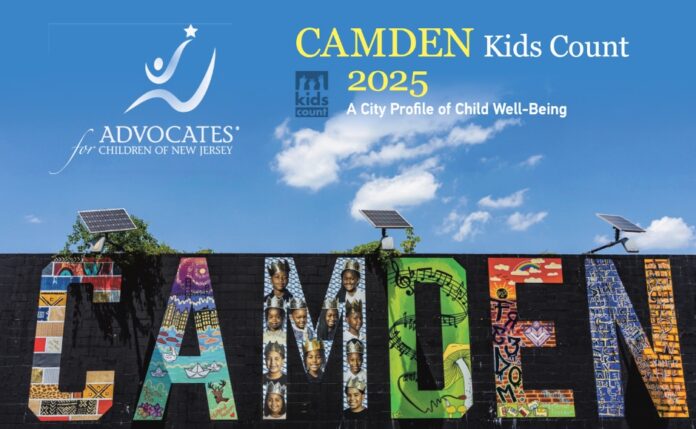

A newly released child well-being report focused exclusively on Camden offers a detailed and, at times, sobering portrait of how the city’s youngest residents are faring amid rising costs and ongoing uncertainty around federal support programs. The 2025 Camden Kids Count report, the first Camden-specific analysis of its kind in more than two decades, tracks nearly 100 indicators spanning family income, housing stability, health, education, and child protection.
The findings reveal a city that has made measurable gains while still facing deep structural challenges. Child poverty in Camden has declined significantly over the past decade, and median household income has risen sharply. Yet for many families, those improvements have not kept pace with the cost of living. A majority of households continue to devote a large share of their income to rent, and thousands of children rely on nutrition, health, and income-support programs that remain vulnerable to shifting budget priorities.
Camden is home to just under 20,000 children, and the report underscores the degree to which public assistance programs underpin daily life for many families. Roughly two-thirds of Camden children depend on SNAP benefits or school meal programs to meet basic nutritional needs. Enrollment in NJ FamilyCare, which is supported in part through Medicaid funding, remains widespread, covering the overwhelming majority of children under 19 in the city. Programs such as WIC and TANF also continue to serve thousands of residents, forming a critical safety net for working families who remain financially stretched.
Housing costs emerge as one of the most pressing pressures. More than 60 percent of Camden households spend at least 30 percent of their income on rent, a threshold commonly associated with housing insecurity. More than a third of households devote half or more of their income to housing alone. These figures persist despite a substantial rise in median family income over the past several years, illustrating how inflation and stagnant wages in certain sectors continue to erode purchasing power.
Education data in the report presents a mixed picture. Graduation rates in the Camden City School District have improved, climbing steadily over the past few years. However, the city still trails the statewide average by a wide margin, and chronic absenteeism remains a significant obstacle, with nearly half of students missing more than 10 percent of the school year. Enrollment in state-funded preschool programs has also declined, raising concerns about early learning access at a time when research continues to show its long-term benefits.
The report also highlights Camden’s growing diversity. A significant share of births in the city are to foreign-born mothers, and a large portion of households speak a language other than English at home. These demographic shifts bring cultural richness but also increase the need for multilingual educational services, health care access, and family outreach programs that reflect the community’s evolving makeup.
Health indicators show encouraging trends alongside areas of concern. Access to early prenatal care has improved, and the number of babies born with low birthweight has declined over the past five years. Still, Camden’s rates remain higher than the statewide average, pointing to the need for sustained investment in maternal and infant health services. In child protection, the number of children under supervision has decreased, yet reports of abuse and neglect have risen, and longstanding disparities persist in how children of different backgrounds interact with the system.
Advocates say the timing of the report is especially significant. With state leadership changes on the horizon and continued debate at the federal level over funding for programs like SNAP and Medicaid, the data arrives as policymakers weigh difficult budget decisions. Community leaders stress that the progress documented in Camden is closely tied to sustained public investment and warn that reductions could reverse hard-won gains.
The Camden Kids Count findings are being presented this month at a local education and advocacy symposium, where policymakers, educators, and nonprofit leaders will discuss how to translate the data into action. Supporters of the report emphasize that its purpose is not only to measure conditions, but to guide smarter planning and more equitable allocation of resources.
As Camden continues its gradual recovery from decades of economic hardship, the report makes clear that children remain at the center of the city’s future. The data suggests that targeted investments can produce real results, but also that progress remains fragile. Broader coverage of issues affecting Camden and neighboring communities can be found in Explore New Jersey’s South Jersey section, which continues to track the region’s evolving challenges and opportunities.