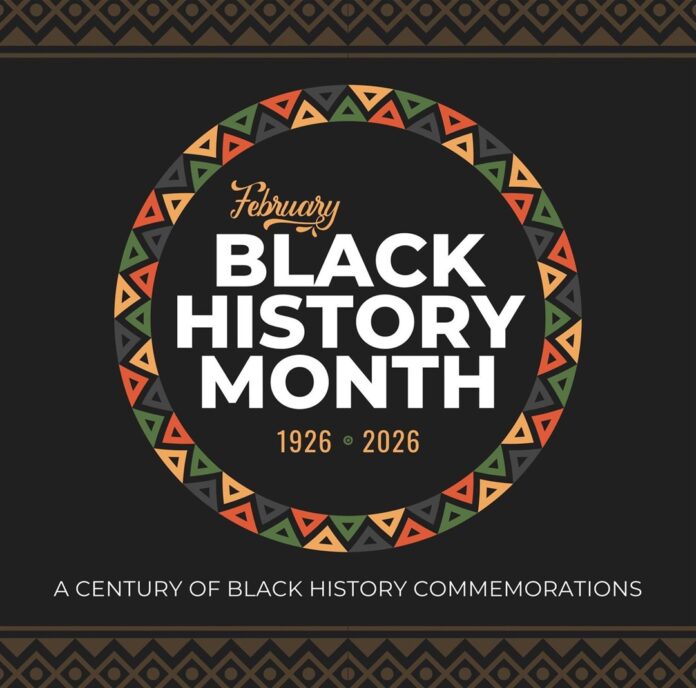

Morris County is entering Black History Month in 2026 with a renewed sense of purpose, officially proclaiming February as Black History Month while simultaneously honoring a national milestone that reaches back a full century to the very first organized recognition of what was then known as Black History Week in 1926.
The proclamation does more than mark a date on the calendar. It places Morris County within a nationwide moment of reflection and recommitment to preserving, elevating, and sharing the stories that have shaped American life, culture, and democracy for generations. As the 100th anniversary of the original national observance arrives, county leaders are framing 2026 as a landmark year for education, community engagement, historical preservation, and creative expression across Morris County’s municipalities, schools, libraries, and cultural institutions.
The roots of this centennial stretch back to the early twentieth century, when historian Carter G. Woodson and fellow scholars launched the first coordinated effort to document and celebrate the contributions of African Americans at a time when those stories were largely excluded from mainstream historical narratives. What began as a single week of recognition has grown into a nationwide month of programming, scholarship, and public engagement, and Morris County’s 2026 proclamation positions the county to play an active role in shaping how that legacy continues to evolve.
County officials and cultural leaders describe the upcoming Black History Month as both a tribute and a forward-looking initiative. While the centennial anniversary provides a powerful historical anchor, the broader goal is to deepen public understanding of Black history as a living and ongoing story—one that continues to influence education, entrepreneurship, public service, social justice, science, and the arts throughout New Jersey.
Throughout February 2026, residents can expect a coordinated calendar of community-based programs that will extend well beyond ceremonial observances. Public libraries across the county are preparing curated reading programs, lecture series, and archival displays focused on African American history in New Jersey and the broader Mid-Atlantic region. School districts are planning classroom-based initiatives that emphasize primary source learning, student research projects, and intergenerational storytelling.
Local historical organizations are also working to highlight narratives that have often gone unrecorded—stories of Black families, veterans, business owners, educators, and faith leaders whose impact helped shape towns across Morris County long before their contributions were widely acknowledged in public records.
Cultural organizations and creative partners are expected to play a central role in transforming the centennial into an immersive public experience. Exhibitions, performances, film screenings, and community conversations are being designed to connect historical scholarship with contemporary voices and artistic expression. Residents interested in exploring how cultural programming across the state continues to amplify diverse stories and perspectives can follow expanded coverage through Explore New Jersey’s [arts and culture features], which spotlight creative initiatives and heritage programming that connect communities through shared history.
In Morris County, organizers are placing particular emphasis on community participation and accessibility. Programs are being developed not only for established cultural venues but also for neighborhood centers, houses of worship, and public gathering spaces, ensuring that residents of all ages and backgrounds can engage with the centennial in meaningful ways. Many initiatives will be free and open to the public, reinforcing the county’s commitment to making cultural and historical education widely available.
The 2026 proclamation also aligns with ongoing efforts throughout the county to strengthen inclusive historical preservation. Local historians are collaborating with community members to collect oral histories and family archives that capture lived experiences spanning multiple generations. These efforts are expected to expand existing historical collections and create new educational resources for future students, researchers, and cultural institutions.
Beyond its educational and cultural significance, the centennial observance is being recognized as an opportunity to foster dialogue around civic engagement, representation, and equity. Community panels and facilitated discussions are being planned to explore how historical understanding can inform present-day leadership, public policy, and community development. Organizers have emphasized that Black History Month in 2026 is not intended to be confined to retrospection, but rather to encourage broader conversations about opportunity, participation, and shared responsibility within Morris County’s rapidly changing communities.
Faith organizations, civic associations, and youth leadership groups are also preparing programming that centers on service, mentorship, and cross-cultural exchange. From student-led heritage projects to community service initiatives honoring local trailblazers, the county’s Black History Month framework is being shaped as an active and participatory experience rather than a passive observance.
Morris County’s proclamation arrives at a moment when public interest in local history is expanding statewide. Residents are increasingly seeking out place-based narratives that connect national history to neighborhood streets, schools, and institutions. By anchoring its 2026 observance to the 100th anniversary of the nation’s first formal recognition of Black history, the county is underscoring the importance of both national legacy and local responsibility.
As February 2026 approaches, Morris County’s centennial Black History Month will stand as a comprehensive, community-driven effort to honor the past while investing in cultural education, creative expression, and historical storytelling for the next generation. Through collaborative programming, inclusive outreach, and a countywide commitment to visibility and representation, the proclamation signals that Black history is not simply remembered in Morris County—it is actively celebrated, studied, and carried forward.