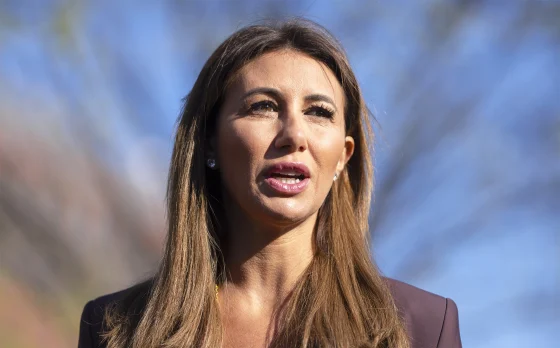

New Jersey’s political landscape saw a major shakeup today as Alina Habba announced she is stepping down from her position as the state’s top federal prosecutor. Habba, who had been serving as Acting U.S. Attorney, confirmed her resignation shortly after a federal appeals court ruled that she had been unlawfully occupying the post. Her temporary appointment expired months earlier, and without Senate confirmation, the court determined that her continued service violated federal appointment rules. The Trump administration had been seeking avenues to keep her in place despite the lapse, prompting a legal battle that ultimately forced the office into the spotlight.
In a formal statement, Habba emphasized that her decision to resign was made to preserve “the stability and integrity” of the U.S. Attorney’s Office for the District of New Jersey. Even as she steps aside, the administration signaled that it intends to continue appealing the ruling, leaving open the possibility of further legal disputes in the months ahead. For readers following the evolving political environment in the region, additional coverage can be found in our politics section.
Despite leaving the position, Habba is not departing the Department of Justice. She is expected to transition into a senior advisory role under U.S. Attorney General Pam Bondi, where she will remain involved in high-level federal oversight and strategy. Her shift into the advisory position suggests that while the legal setback ended her tenure in New Jersey, she will continue to play a significant part in shaping national-level justice and enforcement priorities.
The circumstances surrounding her resignation mark one of the most consequential federal legal developments in the state this year. Acting U.S. Attorneys oversee major prosecutions, statewide investigations, and federal coordination with local agencies. Questions over the legality of leadership in such a position introduce uncertainties not only for ongoing cases, but for the broader public’s confidence in the office’s independence. Legal analysts note that court rulings on improper appointments are rare, adding to the significance of this moment for the state’s judicial and political sectors.
The federal office now faces the challenge of navigating the transition while maintaining continuity in its work, from white-collar investigations to organized crime operations and civil rights enforcement. As the Department of Justice prepares a new nominee—who will require Senate confirmation—the uncertainty surrounding the role is likely to fuel further debate among lawmakers and legal observers.
Habba’s exit leaves New Jersey at a crossroads in its federal leadership, with implications that may ripple beyond the state’s borders. As attention shifts toward who will step into the position next, the fallout from the court decision continues to underscore the importance of proper vetting, timely confirmation, and transparent governance at the highest levels of public service.