
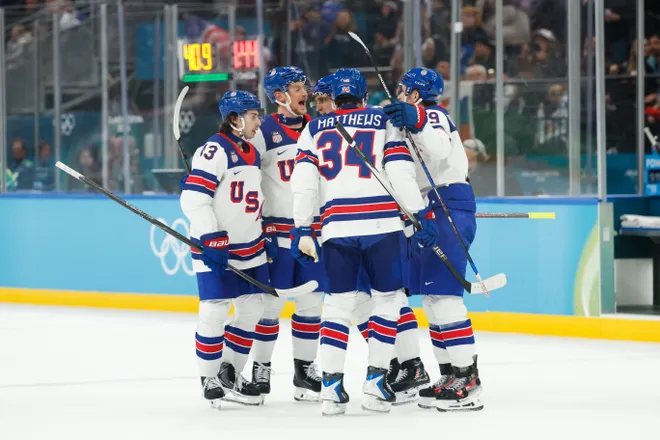

The road to Olympic glory now runs through one of hockey’s greatest rivalries as Team USA powered into the Gold Medal Game with a commanding 6–2 victory over Slovakia on February 20, 2026. Fueled by an explosive second-period surge and a dominant performance from New Jersey Devils superstar Jack Hughes, the Americans delivered a statement win that showcased speed, depth, and championship-level execution on the international stage.
The victory secures a highly anticipated gold medal showdown against Canada on February 22, setting the stage for a defining moment in international hockey. For New Jersey hockey fans, the semifinal represented more than a team triumph — it was a showcase of the Hughes brothers’ growing influence on the global game and a powerful reflection of the Garden State’s expanding role in elite hockey culture.
With Jack Hughes leading the offensive charge, Quinn Hughes anchoring the defense, and Luke Hughes contributing on the blue line, the semifinal victory highlighted one of the most impactful family legacies in modern hockey while reinforcing the United States’ rise as a dominant force in international competition.
A Dominant Performance From Start to Finish
USA vs. Slovakia Game Summary
The Americans controlled the pace from the start, outshooting Slovakia and building a commanding lead before the third period. Detroit Free Press +1
| Period | Score | Key USA Scorers |
|---|---|---|
| 1st | 2 – 0 | Dylan Larkin, Tage Thompson (PP) |
| 2nd | 3 – 0 | Jack Hughes (2), Jack Eichel |
| 3rd | 1 – 2 | Brady Tkachuk |
| Final | 6 – 2 | USA Advances to Final |
From the opening puck drop, Team USA controlled the tempo against Slovakia, dictating play with relentless pressure, crisp puck movement, and disciplined defensive structure. The Americans outshot and outpaced their opponents throughout the contest, establishing an early lead and steadily expanding their advantage.
The scoring progression reflected complete control:
First Period — USA 2, Slovakia 0
Dylan Larkin opened the scoring just over four minutes into the game, skating down the left flank and firing a precise shot past Slovakia’s goaltender. Team USA doubled its lead late in the period when Tage Thompson converted on a power play, capitalizing on sustained offensive pressure.
Second Period — USA 5, Slovakia 0
The game’s decisive stretch unfolded in the second period, where Team USA overwhelmed Slovakia with speed and offensive execution. Jack Hughes scored twice in rapid succession, while Jack Eichel added another goal to extend the lead beyond reach.
The Americans built such a commanding lead that the final period became a formality, highlighting the team’s overwhelming dominance across all zones.
Third Period — USA 6, Slovakia 2
Brady Tkachuk added an additional goal for the United States, while Slovakia managed two late scores that did little to shift the outcome.
Jack Hughes Delivers a Game-Changing Performance
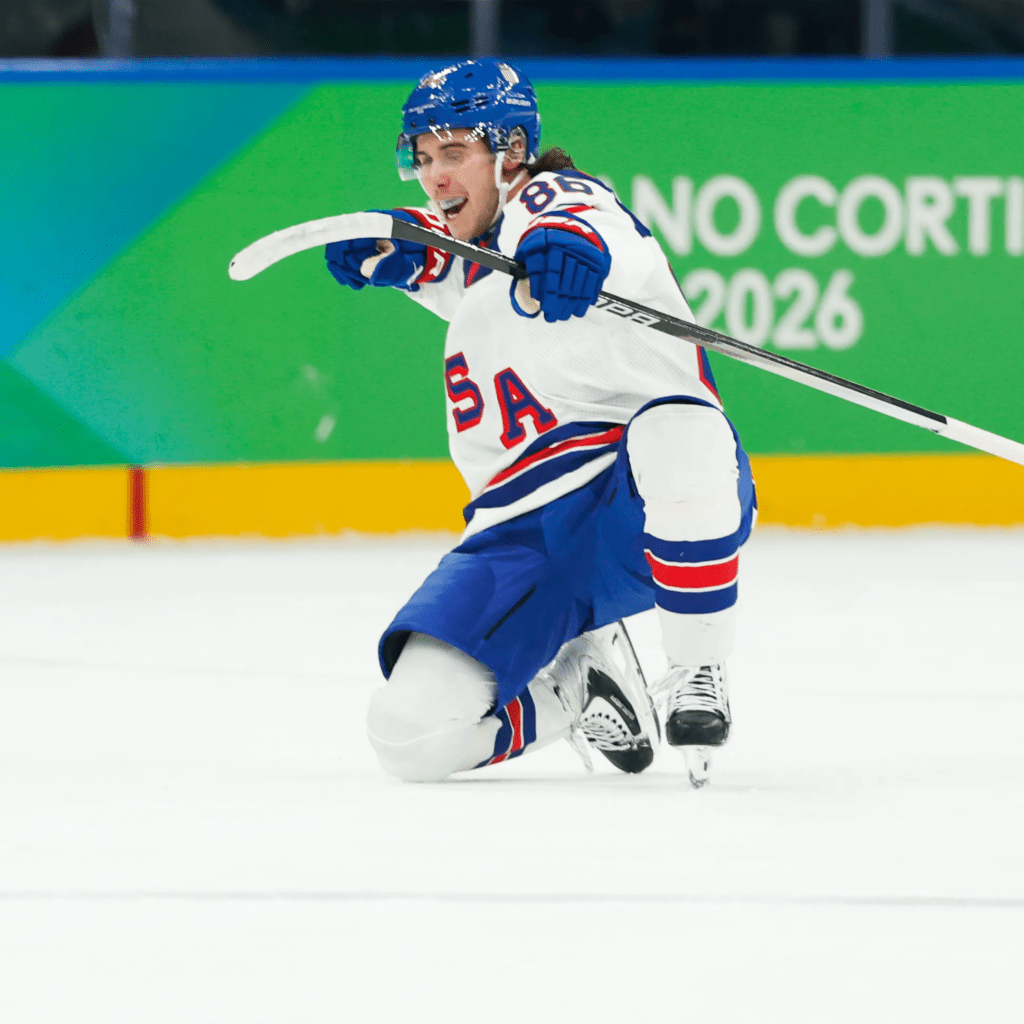
New Jersey Devils star Jack Hughes emerged as the defining force of the semifinal, delivering a performance that showcased elite skill, vision, and scoring ability. His two second-period goals transformed the game from competitive to decisive within minutes.
His first goal demonstrated the dynamic creativity that has made him one of the NHL’s most electrifying players — maneuvering past multiple defenders before delivering a top-shelf wrist shot that ignited the American bench.
Just moments later, Hughes struck again, extending the lead to 5–0 and effectively sealing the victory. The rapid scoring sequence underscored his ability to control the pace of a game and deliver under the brightest international spotlight.
For New Jersey Devils supporters, the performance reinforces Hughes’ role as a franchise cornerstone and one of the most influential young players in the sport today.
The Hughes Brothers’ Historic Impact
The semifinal also showcased the extraordinary presence of the Hughes family in international hockey. Jack, Quinn, and Luke Hughes each played key roles in Team USA’s championship push, representing a generational shift in American hockey defined by speed, technical skill, and high hockey IQ.
Quinn Hughes continued to serve as a foundational force on defense, logging top-pair minutes alongside Charlie McAvoy and driving transitions out of the defensive zone. His semifinal performance followed a dramatic quarterfinal victory in which he scored the overtime game-winner against Sweden, sending Team USA into the semifinal round.
Luke Hughes, the youngest of the three brothers and another rising star connected to the New Jersey Devils, provided steady support on the blue line. His presence reflects the remarkable pipeline of American defensive talent and reinforces the growing influence of New Jersey’s hockey development system.
Together, the Hughes brothers symbolize the future of American hockey — a blend of speed, creativity, and positional versatility that continues to reshape the game.
Team USA’s Depth and Offensive Firepower
Beyond the Hughes brothers, Team USA demonstrated remarkable depth throughout the lineup. Multiple players contributed multi-point performances, highlighting the roster’s balance and offensive versatility.
Jack Eichel played a pivotal role in the second-period surge, while Brady and Matthew Tkachuk added energy, physicality, and scoring production. Zach Werenski contributed playmaking support from the blue line, and Connor Hellebuyck provided stability in goal despite late Slovak scoring.
The team’s ability to generate offense across all lines reflects a roster built for sustained tournament success — one capable of overwhelming opponents through speed, skill, and strategic execution.
A Tactical Masterclass in the Second Period
The turning point of the game arrived midway through the second period, when the United States seized full control. The Americans established a decisive shot advantage and sustained offensive pressure that left Slovakia unable to respond.
A waived-off goal from Matt Boldy signaled the mounting pressure, but moments later Hughes and Eichel delivered legitimate scoring strikes that broke the game open.
The second-period explosion demonstrated Team USA’s ability to capitalize on momentum and execute under pressure — essential qualities for championship competition.
A Renewed USA–Canada Rivalry for Olympic Gold
With the semifinal victory secured, Team USA now prepares for a championship clash against Canada, one of hockey’s most historic rivalries. Canada advanced to the final earlier in the day with a narrow victory over Finland, setting up the matchup fans across North America anticipated from the start of the tournament.
The gold medal game will take place February 22, just days after the United States women’s team defeated Canada to capture their own Olympic gold. The back-to-back championship meetings highlight the enduring intensity of the USA–Canada rivalry and the global significance of the matchup.
The men’s final represents an opportunity for the United States to secure one of the program’s most significant victories and establish a new era of international dominance.
New Jersey’s Growing Influence on Global Hockey
The Hughes brothers’ impact reflects the expanding influence of New Jersey within the international hockey landscape. The success of players connected to the New Jersey Devils and the state’s robust youth hockey infrastructure continues to elevate the Garden State’s reputation as a development hub for elite talent.
Across New Jersey, increased investment in youth programs, training facilities, and community engagement initiatives has strengthened the region’s hockey culture. The presence of New Jersey–connected players on the Olympic stage demonstrates the success of these development pathways.
This growing influence extends beyond professional success, inspiring a new generation of players and reinforcing hockey’s expanding footprint across the state.
The Evolution of American Hockey
Team USA’s tournament performance reflects the ongoing evolution of American hockey philosophy. Modern American teams emphasize speed, skill, and offensive creativity, moving away from purely physical play toward a more dynamic and adaptable style.
The Hughes brothers embody this transformation, representing a new generation of players capable of influencing every aspect of the game. Their impact signals a shift toward a faster, more technical brand of hockey that aligns with global trends.
The semifinal victory over Slovakia demonstrated the effectiveness of this approach, combining precision offense with disciplined defense and strategic execution.
A Defining Moment for the U.S. Program
The 6–2 victory over Slovakia represents more than advancement to a championship game — it reflects the strength of the United States hockey program and its continued rise on the international stage.
The team’s blend of veteran leadership, emerging stars, and organizational depth positions it for sustained success. The upcoming gold medal game offers an opportunity to cement that progress and capture a defining victory in international competition.
For New Jersey fans, the moment carries additional significance, highlighting the profound impact of Devils stars on the global game and reinforcing the state’s place within hockey’s evolving future.
The Road to Gold Continues
As Team USA prepares for its gold medal showdown against Canada, anticipation continues to build across the hockey world. The semifinal victory demonstrated the team’s offensive power, defensive structure, and championship potential.
With Jack Hughes leading the charge, Quinn Hughes anchoring the defense, and Luke Hughes contributing to a dominant roster, the United States enters the final with momentum, confidence, and a chance to secure Olympic glory.
The stage is set for a historic rivalry, a championship moment, and another chapter in the rise of American hockey — driven by New Jersey’s brightest stars and a team determined to claim gold on the world stage.
















