
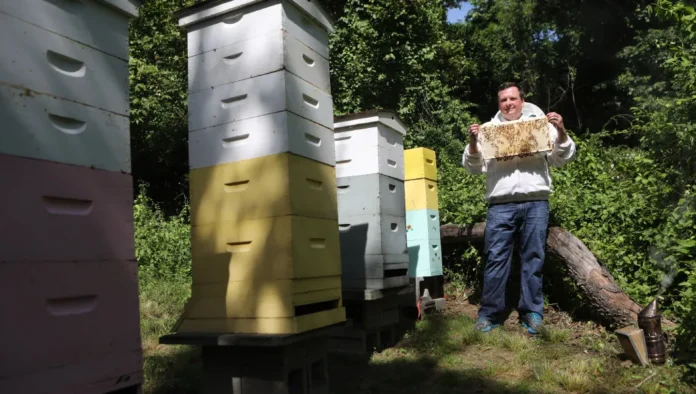

Across New Jersey, a quiet yet remarkable agricultural movement is flourishing—one defined by the steady hum of honeybees, the craftsmanship of dedicated apiarists, and a growing appreciation for locally produced honey. From small backyard hives in urban neighborhoods to expansive working farms and educational apiaries, the Garden State has become a vibrant center for sustainable beekeeping, with producers and enthusiasts helping to shape a dynamic industry rooted in environmental stewardship, culinary innovation, and community connection.
Beekeeping Industry Statistics
| Metric | Statistic |
|---|---|
| Total Bee Colonies | ~20,000 |
| Active Beekeepers (NJBA) | 1,500+ |
| Industry Value | ~$7 Million |
| Agricultural Impact | Contributes to ~$200M in fruit/veg production |
At the forefront of this movement is Holly City Honey Bees, a Millville-based apiary that reflects both the tradition and forward-thinking spirit of New Jersey’s modern beekeeping culture. Located in the Cumberland County community historically known as the “Holly City,” the family-run operation has built a reputation for its commitment to sustainable practices and the production of high-quality raw honey.
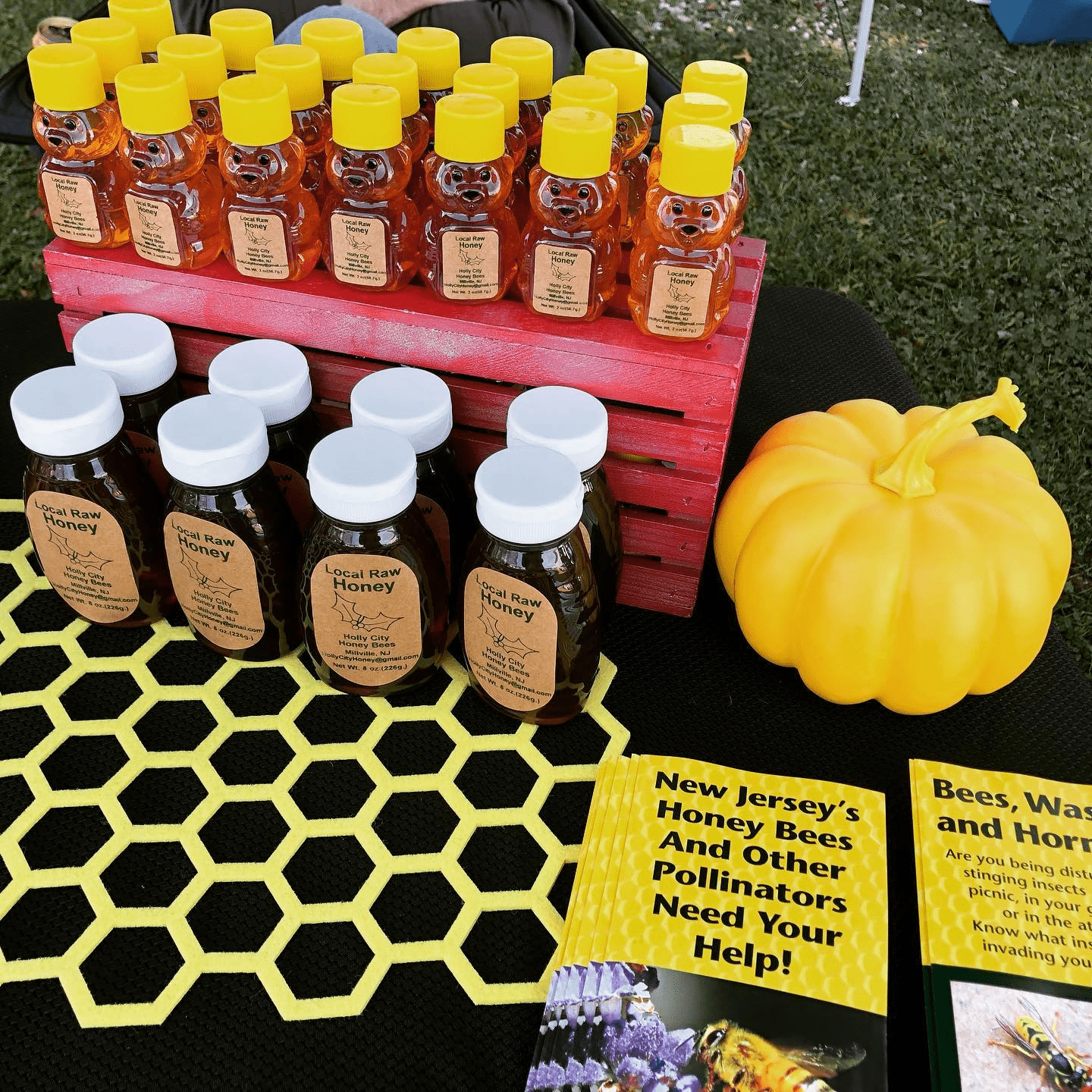
Owned and operated by Meghan McConnell, an entomologist who also serves as New Jersey’s State Apiarist, Holly City Honey Bees combines scientific expertise with hands-on agricultural practice. McConnell’s leadership underscores the growing intersection between environmental research and local food production, demonstrating how responsible beekeeping can support pollinator health while providing distinctive farm products. The apiary specializes in pure, unfiltered honey varieties, including small-batch and creamed selections, and recently announced the beginning of its latest seasonal harvest.
Beyond production, the Millville apiary emphasizes education and community engagement. Through partnerships with local schools and public programs, the organization introduces students and residents to the critical role honeybees play in pollination and ecosystem balance. These outreach efforts reflect a broader commitment to fostering environmental awareness and strengthening connections between agriculture and everyday life.
Holly City Honey Bees represents just one example within a statewide network of beekeepers who collectively sustain New Jersey’s thriving honey industry. The state is home to approximately 20,000 managed bee colonies and more than 1,500 active beekeepers affiliated with regional organizations, illustrating the scale and significance of apiculture within the state’s agricultural economy. The industry contributes millions of dollars annually while supporting fruit and vegetable production valued at hundreds of millions, underscoring the essential role pollinators play in New Jersey’s food system.
Across the state’s diverse regions, apiaries operate in a variety of forms, ranging from small boutique producers to larger commercial enterprises. In South Jersey, several notable honey farms have gained recognition for their unique approaches to beekeeping and product development. Mill Creek Apiary in Medford operates multiple hive locations and offers educational programs focused on the ecological importance of honeybees. Anthony’s Local Honey in Sewell provides round-the-clock access through a self-service honey stand, reflecting the trust-based traditions that often characterize local agriculture. Birds and Bees Farm in Bordentown produces distinctive seasonal varieties, while Fruitwood Orchards in Monroeville continues a long-standing family tradition of cultivating diverse honey types.
Honey Farms & Apiaries in New Jersey
| Apiary Name | Location | Primary Products | Feature |
|---|---|---|---|
| Garden State Apiaries | Jackson | Raw/creamed honey, NUCs | Multiple apiaries in Cream Ridge & Upper Freehold. |
| Neshanic Station Apiaries | Flemington | Boutique honey, soaps | Offers beekeeping tours and candle classes. |
| Mill Creek Apiary | Medford | Infused honey, beeswax | Manages ~15 apiaries across South Jersey farms. |
| Birds and Bees Farm | Bordentown | Varietal raw honey | Certified Jersey Fresh with over 200 hives. |
| Tassot Apiaries | Milford | Raw/chemical-free honey | Manages 200+ hives across Hunterdon & Somerset. |
| E&M Gold Beekeepers | Tinton Falls | Small-batch wildflower | Features a “Honey House” for curbside pickup. |
| HarBee Beekeeping | Newton | Regenerative honey | Focuses on sustainable agriculture and healthy colonies. |
| Mayflower Honey Farm | Monmouth Jct | Honey and honeycomb | Provides a cash-only self-serve kiosk on-site. |
| Honeysuckle Nectary | Monmouth Co. | Raw honey, skincare | Family-owned with hives forage across local nectar sources. |
| Anthony’s Local Honey | Sewell | Hot pepper/garlic honey | Famous for their 24/7 self-serve “Honey Shack”. |
Many of these locations, like
Gooserock Farm in Montville and Mayflower Honey Farm, use self-service kiosks. It is a good idea to carry cash, as these small farm stands often use an honor system and may not have card readers available at the stand itself.
Central Jersey’s beekeeping community also plays a vital role in the industry’s growth. Family-run operations such as E&M Gold Beekeepers in Tinton Falls have produced small-batch honey for decades, while Marlboro’s Do Re Bee offers educational tours that provide visitors with an inside look at hive management and honey production.
In North Jersey, apiaries like Gooserock Farm maintain extensive colonies and operate self-service honey houses, while Hilltop Honey in North Caldwell integrates philanthropy into its business model by supporting community initiatives. Tassot Apiaries in Milford oversees hundreds of hives across multiple locations, demonstrating the scale and sophistication of modern beekeeping operations within the region.
Many of these farms function as working agricultural sites rather than traditional tourist destinations, emphasizing the importance of checking availability before visiting. Their primary focus remains the careful management of hives, honey production, and environmental stewardship, reflecting the labor-intensive nature of apiculture.
Beekeeping has also become an integral component of sustainable farming practices across New Jersey. Beach Plum Farm in West Cape May, a regenerative agricultural operation spanning more than 60 acres, has maintained honeybee colonies for over a decade to support pollination of its extensive fruit and vegetable crops. The farm’s market offers small-batch honey alongside other locally produced goods, demonstrating how pollinator management can enhance both agricultural productivity and culinary offerings.
Similarly, Saddlehill Cellars in Voorhees Township has incorporated beekeeping into its broader vision for a self-sustaining estate. The historic property, once associated with George Washington’s personal guard, now maintains dozens of active hives that contribute to the production of estate honey and artisanal goods. Through seasonal events and culinary experiences, the estate highlights the connection between agriculture, craftsmanship, and local heritage.
While commercial and farm-based apiaries form the backbone of the industry, backyard beekeeping has emerged as a powerful force driving the state’s honey boom. Across New Jersey, thousands of residents have embraced the practice, installing hives in suburban gardens, urban rooftops, and community spaces. Many of these enthusiasts begin with little agricultural experience, drawn by the opportunity to support pollinator populations and produce their own locally sourced honey.
In Trenton, for example, hobbyist beekeeper Marc Leckington manages hives in the backyard of his home, producing hundreds of pounds of honey annually. What began as a personal experiment has evolved into a productive enterprise supplying brewers, mead makers, and local customers with richly flavored honey and fresh honeycomb. His experience reflects a broader trend in which individuals contribute to local food systems through small-scale agricultural initiatives.
The growing demand for locally produced honey has also attracted interest from chefs, restaurateurs, and beverage producers seeking distinctive ingredients. Artisanal honey varieties are increasingly featured in sauces, marinades, cocktails, and specialty foods, valued for their complex flavor profiles and connection to regional landscapes. Unlike mass-produced alternatives, local honey captures the unique characteristics of the plants and ecosystems from which bees gather nectar, offering a taste experience shaped by place.
New Jersey’s culinary community has embraced this diversity, incorporating local honey into innovative dishes and beverages. Mead, one of the world’s oldest fermented drinks made from honey, has experienced renewed popularity in recent years, with producers crafting distinctive varieties using regional honey sources. Specialty products such as infused and spiced honeys further demonstrate the versatility of this natural ingredient.
Environmental factors continue to influence the future of beekeeping, as pollinator populations face challenges from habitat loss, climate change, and pests. Despite these pressures, New Jersey’s beekeeping community remains committed to protecting bee health through responsible management practices and conservation efforts. Their work not only sustains honey production but also supports biodiversity and agricultural resilience.
The essential role of bees in maintaining healthy ecosystems has contributed to a growing public appreciation for apiculture as both a scientific discipline and a cultural tradition. Educational initiatives, community events, and local markets provide opportunities for residents to engage with the industry and learn about the delicate balance that sustains pollinator populations.
New Jersey’s flourishing beekeeping landscape reflects the state’s broader commitment to environmental stewardship, agricultural innovation, and cultural heritage. From professional apiaries and working farms to backyard enthusiasts and culinary pioneers, the individuals shaping this industry represent a diverse community united by a shared respect for nature’s most industrious pollinators.
For those interested in exploring the creative and cultural dimensions of New Jersey’s agricultural traditions, including the artistry and heritage behind local food production, additional features within New Jersey’s art and culture coverage highlight the people and practices that continue to shape the state’s identity.
As the gentle buzz of honeybees continues to echo across fields, neighborhoods, and orchards, New Jersey’s beekeeping community stands as a testament to the enduring relationship between humans and the natural world. Through dedication, innovation, and a deep respect for the environment, these beekeepers are preserving a vital tradition while producing one of nature’s most treasured gifts—locally harvested honey that reflects the spirit of the Garden State itself.
















