
A growing number of nurse practitioner– and physician assistant–led telehealth urgent care practices across New Jersey are turning to Physician Collaborators as a streamlined solution for securing compliant, affordable physician collaboration agreements—an essential requirement for operating modern virtual care services in regulated clinical environments.
Physician Collaborators announced an expanded service model designed specifically for telehealth urgent care providers, offering one of the most competitive rate structures available for collaborating physician agreements, along with accelerated onboarding, simplified chart review workflows, and a complimentary consultation for new practices evaluating their compliance needs.
As virtual urgent care continues to reshape how New Jersey residents access medical services, practice leaders face mounting pressure to meet regulatory requirements without sacrificing operational efficiency. For NP- and PA-led telehealth groups, finding qualified, board-certified physicians willing to serve as collaborators—while also navigating documentation standards and audit readiness—has become one of the most significant barriers to growth.
Physician Collaborators was built to remove those obstacles.
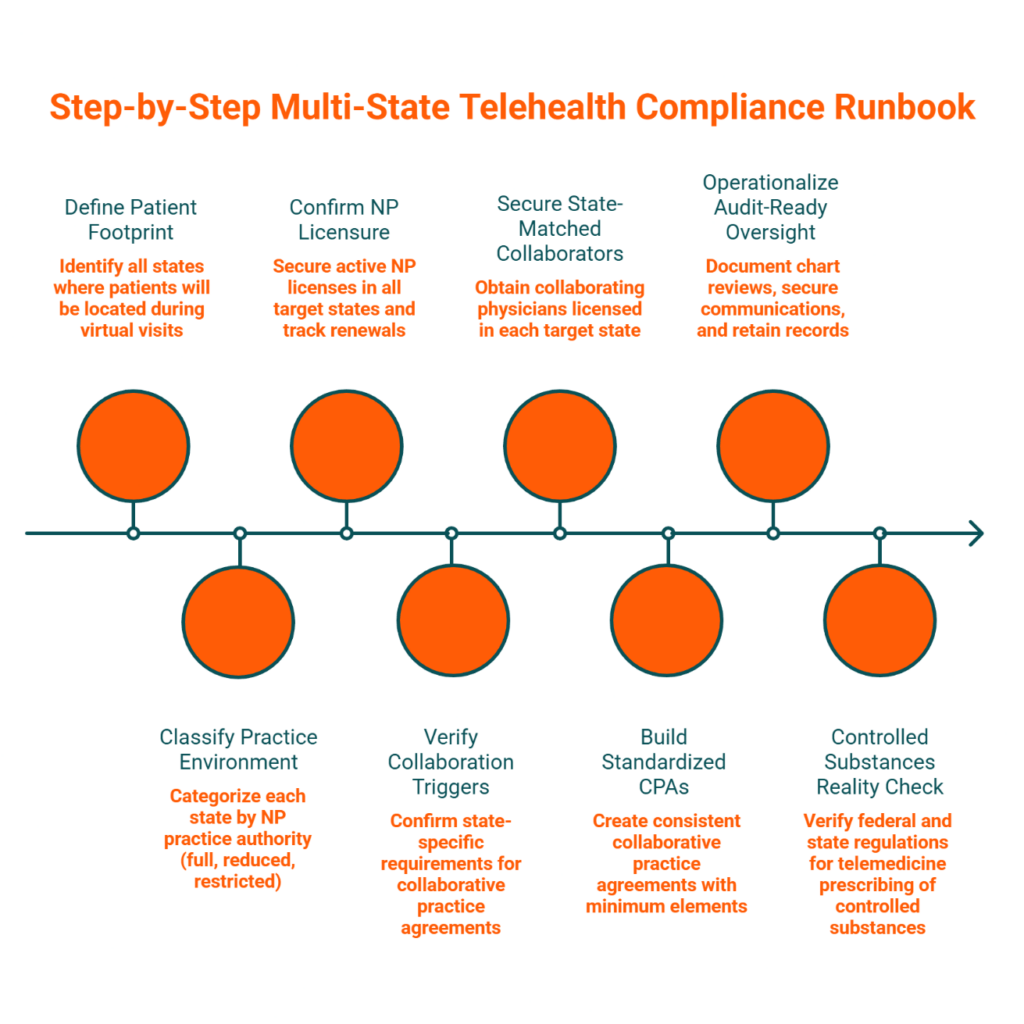
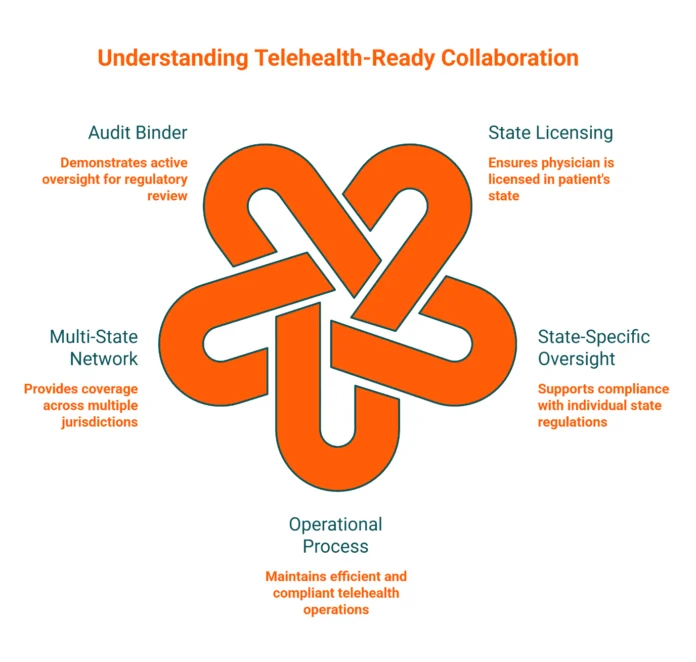
Through its nationwide network of board-certified physicians, the organization connects telehealth urgent care practices with experienced medical collaborators who understand the demands of virtual care delivery, state-specific oversight requirements, and the pace of high-volume, on-demand clinical environments.
What sets the platform apart, company leaders say, is its ability to match practices with physicians quickly and move agreements into place without the lengthy back-and-forth that often delays launches, licensing milestones, and payer enrollment.
For new and expanding New Jersey telehealth urgent care practices, time to activation is critical. Delays in collaboration agreements can stall credentialing, prevent the opening of virtual clinics, and slow expansion into additional service areas. Physician Collaborators has structured its intake and matching process to reduce administrative lag, allowing practices to move from inquiry to signed agreement in a fraction of the time typically required.
Equally important is how clinical oversight is managed once agreements are in place.
Physician Collaborators provides a secure chart upload and review workflow that enables collaborating physicians to efficiently complete supervisory responsibilities while maintaining thorough documentation and quality assurance standards. For telehealth urgent care models—where visit volumes can be high and patient acuity can vary widely—this structure helps ensure that oversight remains consistent, traceable, and compliant.
The organization’s model is particularly attractive to small and mid-sized NP and PA groups that do not have the internal administrative teams or compliance infrastructure of large hospital systems. By offering standardized review tools and ongoing support, Physician Collaborators allows clinicians to remain focused on patient care rather than operational complexity.
The company’s leadership notes that demand from New Jersey practices has accelerated alongside the rapid expansion of virtual urgent care across the state. Patients increasingly rely on telehealth platforms for acute issues such as respiratory infections, minor injuries, dermatologic concerns, and medication management—placing telehealth urgent care at the center of modern outpatient access.
That shift has also elevated expectations around clinical governance, documentation standards, and physician oversight. Practices are under growing scrutiny from regulators, payers, and credentialing organizations to demonstrate that collaborating relationships are active, meaningful, and properly documented.
Physician Collaborators positions its service as a compliance-forward solution, designed not only to satisfy statutory requirements, but also to support quality assurance programs and long-term practice sustainability.
In addition to offering some of the lowest collaboration rates in the telehealth market, the organization provides a free consultation for practice owners and administrators evaluating how physician collaboration requirements apply to their specific operational structure. This consultative approach helps clarify issues such as supervisory scope, chart review expectations, and how collaboration agreements interact with state licensure and telehealth practice models.
For many emerging urgent care telehealth providers in New Jersey, this early guidance can be the difference between a smooth regulatory pathway and costly missteps.
As virtual care continues to expand, physician collaboration is becoming more closely linked with broader quality and outcomes initiatives. Telehealth providers are increasingly expected to demonstrate alignment with evolving clinical best practices, patient safety frameworks, and population-based care strategies. This growing convergence between regulatory compliance and quality-driven care mirrors wider trends in digital medicine and healthcare delivery, which are reshaping how clinicians and organizations approach long-term health and wellness services.
Readers interested in broader coverage of how digital healthcare, clinical innovation, and patient-centered care models are evolving across the state can explore more reporting and analysis in Explore New Jersey’s health and wellness coverage.
Physician Collaborators’ leadership believes that the next phase of telehealth urgent care will be defined not just by speed and convenience, but by governance, transparency, and physician-supported clinical operations.
By pairing fast, affordable collaborating agreements with practical oversight infrastructure and experienced physician partners, the organization aims to help New Jersey’s NP- and PA-led urgent care practices grow confidently in an increasingly regulated and competitive healthcare environment.
For practices seeking to expand virtual services, launch new urgent care programs, or strengthen compliance frameworks without inflating overhead, Physician Collaborators is positioning itself as a long-term operational partner—supporting the clinicians driving the future of telehealth across New Jersey.