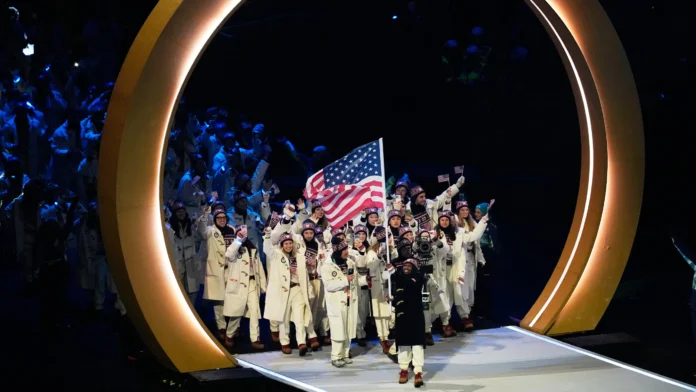

As the opening days of the 2026 Winter Olympics unfold in northern Italy, New Jersey’s presence on the world’s largest sporting stage is both unmistakable and deeply personal. From figure skating to sliding sports and multiple snow disciplines, athletes with roots across the Garden State are carrying hometown pride into the Milano-Cortina Games—and doing so at pivotal moments in their young careers.
At the center of that spotlight stands Isabeau Levito, the Mount Holly-based figure skating standout whose long journey toward Olympic ice has become one of the most compelling New Jersey sports stories of the decade.+
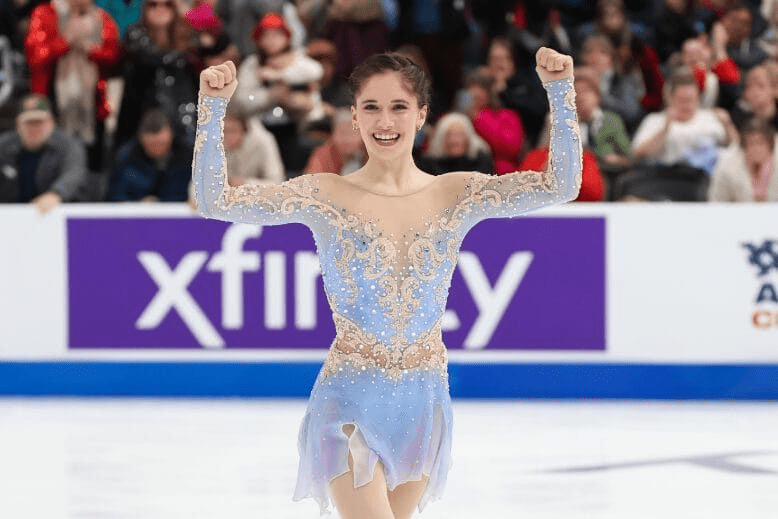
Still only 18 years old, Levito arrives in Italy as the youngest member of the U.S. figure skating team, yet her competitive résumé already reflects a maturity well beyond her age. A World Championship silver medalist and one of the most technically refined skaters in the American program, Levito now transitions from rising star to Olympic debutant—an achievement shaped by more than a decade of relentless discipline.
For South Jersey skating families, her rise has been a point of inspiration. Levito first stepped onto the ice as a toddler, and by the time she reached elementary school, skating had already become central to daily life. When she was nine years old, her family made the difficult and uncommon decision to remove her from traditional schooling so she could fully commit to elite-level training. That choice reshaped every part of her childhood—but also accelerated her development within one of the most demanding individual sports in the world.
Her home rink at the Igloo in Mount Laurel became the backdrop for countless early-morning practices, off-ice conditioning sessions, and choreography work that would gradually build the foundation of her international career.
Levito’s competitive breakthrough began early. She captured the U.S. juvenile national title in 2018, followed by an intermediate silver medal the next season. By 2021, she had risen to claim the national junior championship, signaling that her transition to the senior ranks was not far behind.
The following year, she delivered one of the defining moments of modern U.S. junior skating by winning the World Junior Championship in Estonia—becoming the first American woman in 14 years to claim that title. The victory elevated her instantly from promising prospect to international contender.
Her rapid ascent continued in dramatic fashion when she captured the U.S. women’s national championship in January 2022. The win represented more than a medal. It marked her arrival among the country’s elite, and it confirmed that her blend of technical consistency, musical sensitivity, and calm under pressure could withstand the intensity of senior competition.
Two months later, she finished just outside the podium at the World Championships—another indication that her long-term trajectory was firmly pointed toward Olympic ice.
What has consistently separated Levito from many of her peers is not only her skating quality, but her composure. In a discipline where athletes perform entirely alone and every element is judged in real time, mental stability becomes as critical as physical execution. Throughout her career, she has spoken openly about the psychological demands of competition—recognizing that managing nerves and maintaining clarity under pressure can ultimately determine whether years of preparation translate into clean performances.
That mental framework becomes even more vital at the Olympic Games.
In Milano-Cortina, Levito is scheduled to compete in the women’s short program on Tuesday, February 17, followed by the women’s free skate on Thursday, February 19. Both segments will place her directly under global scrutiny, with millions of viewers watching each jump, spin, and step sequence.
Adding an emotional layer to the moment is the setting itself. Italy is her mother’s birthplace, creating a rare and meaningful personal connection to the host country. For Levito and her family, the Olympic stage carries not only professional significance, but a deeply symbolic sense of heritage.
While Levito’s debut anchors New Jersey’s figure skating presence, she is far from the only Garden State athlete competing in Italy.
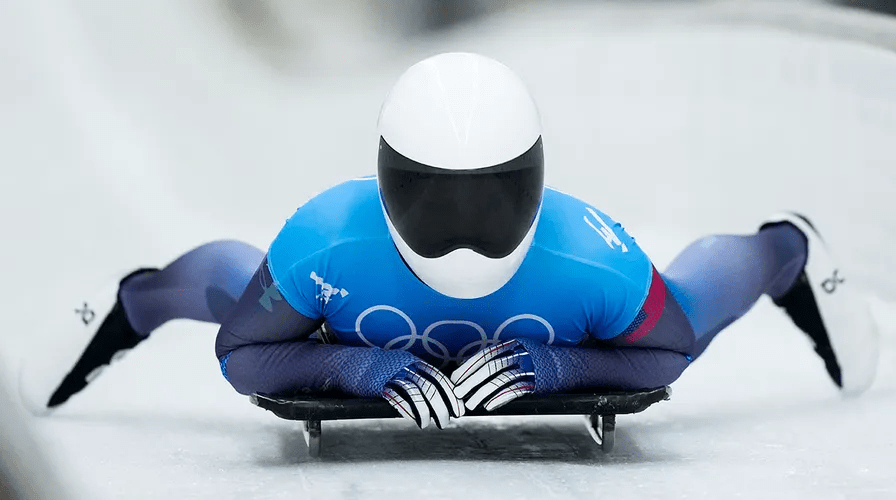
Princeton native Kelly Curtis enters the Olympic spotlight at age 37 as a member of the U.S. skeleton team. In one of the most physically demanding and technically unforgiving sports at the Games, Curtis represents the perseverance of an athlete who has remained competitive well into a discipline where fractions of a second—and fearless precision—define success. Skeleton athletes hurtle headfirst down icy tracks at highway speeds, relying on finely tuned start technique and flawless control through every curve. Curtis’ Olympic appearance reflects years of refinement in a sport that rewards both experience and resilience.
Snowboarding also features prominently in New Jersey’s Olympic footprint.
Millburn’s Jess Perlmutter, just 16 years old, arrives in Milano-Cortina as one of the youngest competitors in the field, taking part in both big air and slopestyle events. Her presence highlights the accelerating youth movement within U.S. snowboarding, where technical innovation and creative expression are advancing at remarkable speed. Competing against seasoned international veterans, Perlmutter brings a fearless approach shaped by years of progressive training in terrain parks and international competition circuits.
Monroe native Brianna Schnorrbusch, 19, represents another powerful chapter in New Jersey’s snow sport story as she prepares to compete in snowboard cross. Unlike freestyle disciplines, snowboard cross combines technical riding with aggressive head-to-head racing, demanding split-second decision-making in chaotic, high-contact environments. Schnorrbusch’s qualification underscores both her physical strength and her tactical race awareness—two qualities essential for navigating one of the Olympics’ most unpredictable events.
The Garden State’s Olympic impact even extends onto the sliding track beyond skeleton.
Former Monmouth University track standout Bryan Sosoo, now 29, joins the U.S. bobsled program, translating elite sprint speed into one of the most specialized roles in winter sport. As a former collegiate sprinter, Sosoo’s explosive start ability is critical to generating early velocity in bobsled runs, where tenths of a second at the push can determine podium placement.
Together, these athletes form one of the most diverse Olympic delegations New Jersey has produced in a single Winter Games cycle—spanning figure skating artistry, gravity-driven sliding sports, and high-risk snowboarding disciplines.
Their collective presence reflects the evolving identity of New Jersey’s athletic development pipeline. Long known for producing elite competitors in traditional high school and collegiate sports, the state has steadily expanded its influence across Olympic and international training pathways. Local clubs, private coaching networks, and university programs now feed directly into national teams across multiple winter disciplines.
For readers following how New Jersey athletes continue to shape national and international competition across a wide range of sports, ongoing coverage can be found through Explore New Jersey’s comprehensive sports reporting, which tracks the athletes, programs, and hometown stories driving the state’s presence on the world stage.
As competition continues in Italy, the achievements of Levito, Curtis, Perlmutter, Schnorrbusch, and Sosoo are already reshaping how New Jersey’s role in winter sports is perceived nationally. Their journeys—rooted in rinks, tracks, and training centers across the Garden State—now converge on Olympic venues where decades of preparation are distilled into a handful of defining moments.
For New Jersey families watching from home, these athletes offer more than medal hopes. They provide living proof that world-class careers can begin in local facilities, suburban neighborhoods, and college programs—and still reach the most demanding arena sport has to offer.