
The New Jersey Devils are entering a defining moment in their season, balancing the urgency of a tight playoff race with bold front-office maneuvering that signals bigger intentions. As the team prepares to welcome the Nashville Predators to the Prudential Center for a Thursday night showdown, the conversation around the club has shifted from single-game results to long-term direction, cap flexibility, and a roster reset designed to spark a second-half surge.
The Devils arrive at this crossroads following a frustrating overtime loss to Winnipeg, a game that exposed both their resilience and their lingering inconsistency. A late lead slipped away, special teams opportunities went unfinished, and defensive lapses at critical moments turned what could have been a statement victory into another narrow defeat. With the Metropolitan Division standings compressed and unforgiving, every dropped point now carries added weight.
Yet the story in Newark isn’t just about a single loss. It’s about a franchise willing to act decisively to reshape its future.
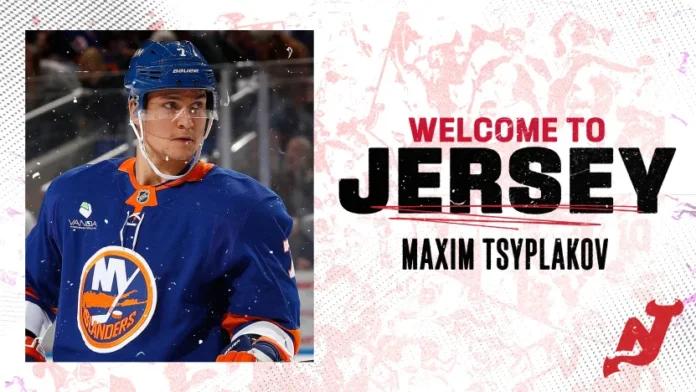
In a move that unfolded dramatically on game day, the Devils traded veteran winger Ondrej Palat along with future draft assets to the New York Islanders in exchange for forward Maxim Tsyplakov. Palat was held out of action for what was described as “roster-related decisions,” a phrase that seasoned hockey fans recognize as the calm before a trade announcement. By the time the puck dropped, the deal was complete, and the Devils had executed one of their most financially strategic transactions in recent memory.
The centerpiece of the move was not simply the incoming player but the outgoing contract. Palat’s deal carried a significant cap commitment into next season, and moving it in full without retaining salary is a rare achievement in today’s NHL economy. In doing so, the Devils created meaningful breathing room both now and in the upcoming offseason, granting general manager Tom Fitzgerald new flexibility to pursue additions, extend young core players, or position the franchise for a larger acquisition down the line.
Maxim Tsyplakov arrives in New Jersey as a change-of-scenery candidate with untapped potential. A big-bodied winger who developed in Russia’s top professional league before making his way to North America, Tsyplakov showed promise in his initial NHL exposure. Though his role diminished this season on Long Island, the Devils offer him a fresh opportunity to establish himself in a system that values speed, puck movement, and transition offense. Expect him to slot into the bottom six initially, where his size and board work can add dimension to a lineup seeking more physical consistency.
For Palat, the trade represents a reunion with familiar leadership and a chance to join an Islanders team pushing toward the postseason. His championship experience, two-way reliability, and locker-room presence made him an influential figure in Newark even when the scoring didn’t always follow. His departure closes a chapter that helped shape the Devils’ recent culture shift toward competitiveness and accountability.
From a strategic standpoint, the move reveals the front office’s clear vision: build financial flexibility first, then evaluate the market for impact upgrades. Whether that means adding before roster freezes, exploring hockey trades, or saving room for summer activity, the Devils now have options. In a league where cap constraints dictate competitive windows, optionality is power.
On the ice, the immediate focus returns to performance. The upcoming matchup against Nashville offers a chance to stabilize after recent close losses. Goaltending, defensive zone structure, and power-play efficiency will remain areas under the microscope as the Devils attempt to climb back into playoff positioning. Every game now doubles as both a standings battle and an audition for players fighting to secure long-term roles.
For fans following the evolving identity of the franchise, this moment captures what makes hockey in New Jersey compelling: bold decisions, young talent, and a restless drive toward contention. Those tracking the team’s continued developments, trade ripple effects, and game-by-game analysis can follow ongoing coverage through Explore New Jersey’s New Jersey Devils hub.
The deal is done. The cap space is created. A new winger is in red and black. A veteran presence heads to a rival. And the Devils move forward with renewed flexibility and sharpened ambition. In Newark, the next chapter is already underway.
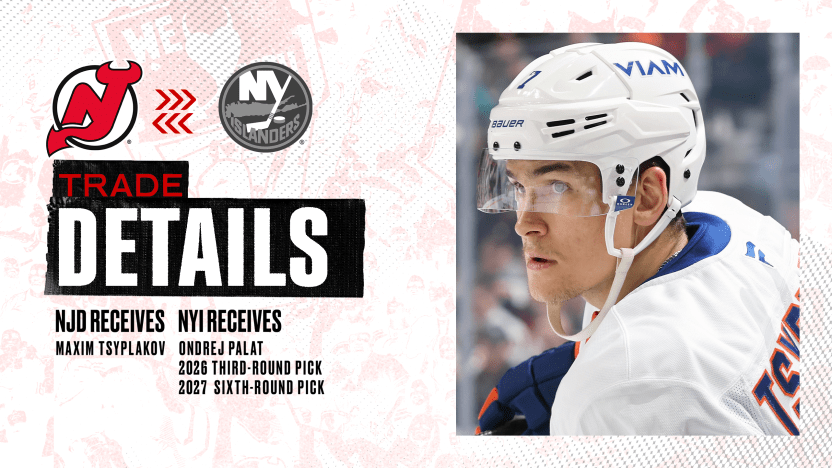
Devils Reshape Their Roster With a Bold Trade That Signals a New Direction in Newark. A shift in strategy has arrived in Newark, and it comes with both immediate impact and long-term implications. The New Jersey Devils have completed a significant roster move, sending veteran forward Ondrej Palat and future draft selections to the New York Islanders in exchange for winger Maxim Tsyplakov. While the transaction reads like a standard midseason trade on paper, the ripple effects stretch far beyond a simple swap of players. This is a deal about flexibility, opportunity, and the evolving identity of a team determined to remain aggressive in its pursuit of sustained contention.
For the Devils, the acquisition of Tsyplakov introduces a new physical presence to a lineup that has leaned heavily on speed and finesse in recent seasons. Standing well over six feet tall and carrying a strong frame built for board battles and net-front traffic, Tsyplakov arrives as a forward who can add grit without sacrificing mobility. His journey to the NHL was unconventional by North American standards, spending years developing in Russia’s top professional league before crossing the Atlantic. That background has given him experience against seasoned competition and a comfort with high-pressure environments, qualities that often translate well when players are given expanded roles in new systems.
Though his most recent season saw limited usage, his earlier NHL performances showed flashes of creativity, puck protection skills, and an ability to contribute in transition. The Devils now have the opportunity to reintroduce him in a fresh setting, where coaching staff can explore his fit across different lines. For a team constantly searching for balance between speed, skill, and physicality, Tsyplakov represents a low-risk, high-upside addition with room to grow.
The other side of the transaction marks the conclusion of Ondrej Palat’s chapter in New Jersey. Palat arrived as a proven winner with championship pedigree and a reputation for elevating teammates in high-stakes moments. Over multiple seasons, he provided playoff experience, responsible two-way play, and quiet leadership in the locker room. While his offensive numbers fluctuated, his value often appeared in the subtleties of forechecking pressure, defensive positioning, and situational awareness. Moving on from such a player is never just a financial decision, but in this case, roster construction and cap management became central priorities.
By transferring Palat’s contract without retaining salary, the Devils have opened meaningful financial breathing room. That space creates opportunities not only for future acquisitions but also for internal planning, from contract extensions for young core players to potential in-season upgrades. In a league where cap flexibility often separates contenders from hopefuls, this move signals that New Jersey’s front office is positioning itself for adaptability rather than stagnation.
Draft picks departing in the transaction underscore the cost of doing business in a competitive trade market. Yet the Devils avoided surrendering premium first-round assets, instead choosing to invest in immediate financial maneuverability and a player they believe can be reimagined within their structure. It’s a calculated approach that blends short-term roster experimentation with long-term strategic planning.
There is also a narrative element that adds intrigue. Tsyplakov previously shared professional ice with Devils defensive prospects during his KHL tenure, giving the organization familiarity with his character and work ethic long before this trade materialized. That background knowledge often plays a role in NHL decision-making, reducing uncertainty when evaluating how a player might adapt to a new locker room and system.
As the season continues, attention will turn to how this move translates on the ice. Can Tsyplakov carve out a consistent role and rediscover the offensive confidence he once displayed? Will the Devils use their new cap flexibility to make another addition before key roster deadlines? And how will the departure of a respected veteran influence team chemistry in a tightly contested playoff race?
For fans tracking every roster development, trade ripple, and lineup adjustment, ongoing coverage of the New Jersey Devils provides deeper insight into the team’s evolving blueprint.
In Newark, this trade is more than a transaction announcement. It’s a statement of intent. The Devils are recalibrating, reallocating resources, and setting the stage for the next phase of their competitive climb. The jersey numbers may change, but the mission remains the same: build a roster capable of turning potential into sustained success.