
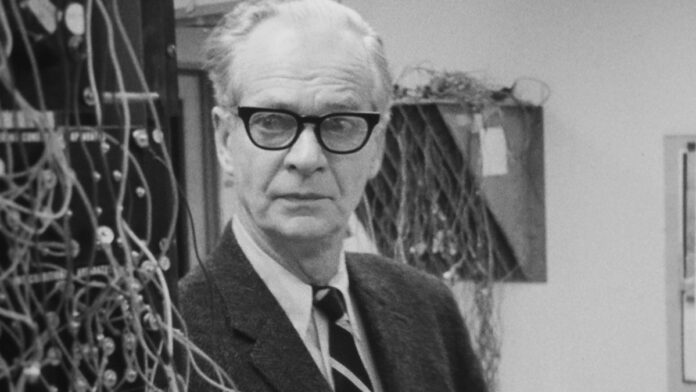

The 2026 New Jersey Film Festival shines a spotlight on one of psychology’s most controversial figures with the screening of B.F. Skinner Plays Himself, a groundbreaking documentary that uncovers previously unseen footage from the 1970s. The festival presentation on January 23 at Rutgers University’s Voorhees Hall promises audiences both in-person and virtual access to this intricate portrait of the pioneering behaviorist, offering a rare glimpse into the life and mind of a man whose theories challenged conventional notions of human freedom and social design.
Directed by Ted Kennedy, the 72-minute documentary repurposes raw, abandoned footage from a 1975 PBS project that Skinner himself disrupted with exacting—and at times impossible—demands. Kennedy transforms the material into a reflective and looping exploration, using the archival content to illuminate Skinner’s scientific ambitions, personal idiosyncrasies, and evolving worldview. The film’s structure mirrors Skinner’s own conceptual frameworks: conditioned sequences, repeated motifs, and the interplay between experiment and environment.
Viewers are taken deep into Skinner’s controversial research. Among the most striking subjects explored are the pigeon-guided bombs developed during World War II, which showcased his attempts to harness animal behavior for practical applications, and his infamous air-conditioned “baby boxes,” experimental cribs designed to condition infant behavior—a concept that sparked national debate about ethics and parenting. The film also examines his work with teaching machines, his early predictions about computers interpreting human language, and the occasional surreal encounters with cultural figures, including exchanges with Dennis Hopper and a theatrical dialogue with an actor portraying Henry David Thoreau.
At its core, B.F. Skinner Plays Himself grapples with what Skinner described as the “autobiography of a nonperson,” a reflection of his belief that human behavior is largely conditioned by environment rather than personal choice. The documentary juxtaposes his utopian ambitions for social engineering against the skepticism that emerged in his later years, presenting a complex figure who oscillated between visionary optimism and contemplative doubt. Kennedy’s creative approach transforms archival footage into a cinematic inquiry that challenges audiences to reconsider the impact of behavioral science on society, ethics, and daily life.
For those attending the festival in-person, the screening is set for 7 PM in Voorhees Hall #105, while virtual audiences can access the film on Video on Demand for 24 hours starting at midnight. B.F. Skinner Plays Himself has already made waves in the film world, premiering at MoMA’s Doc Fortnight in 2025 and appearing on curated platforms such as MUBI, cementing its reputation as both a historical document and a provocative artistic experiment.
The festival screening also situates Skinner’s work within a larger lineage of documentary and archival exploration. Earlier retrospectives, including B.F. Skinner: A Fresh Appraisal (1999), narrated by his colleague Murray Sidman, contextualized his theories and clarified misconceptions, while Retro Report: Behaviorism, B.F. Skinner and Social Media (2021) drew lines between Skinner’s concepts of variable rewards and the addictive structures of modern digital platforms. Kennedy’s film, however, goes further, marrying narrative playfulness with scholarly rigor to create a portrait that is both intimate and intellectually challenging.
The inclusion of this documentary in the New Jersey Film Festival highlights the state’s ongoing role as a hub for innovative storytelling and documentary exploration. Beyond Skinner, the festival consistently champions works that push the boundaries of conventional filmmaking, providing audiences with opportunities to engage with provocative topics through carefully curated screenings and discussions. For enthusiasts interested in a broader exploration of cinematic innovation in the region, the festival is part of a vibrant landscape of [film festivals] in New Jersey that continually elevates independent, experimental, and historically significant works.
As audiences settle in for this rare glimpse into B.F. Skinner’s experimental life, the festival offers more than a screening—it provides a lens through which to examine the intersections of science, ethics, and media. Through Kennedy’s meticulous archival work, viewers witness not only the ambitions of a man who reshaped psychology but also the enduring dialogue between past and present, between theory and human experience, that continues to inform contemporary discussions on behavior, technology, and society.
















