
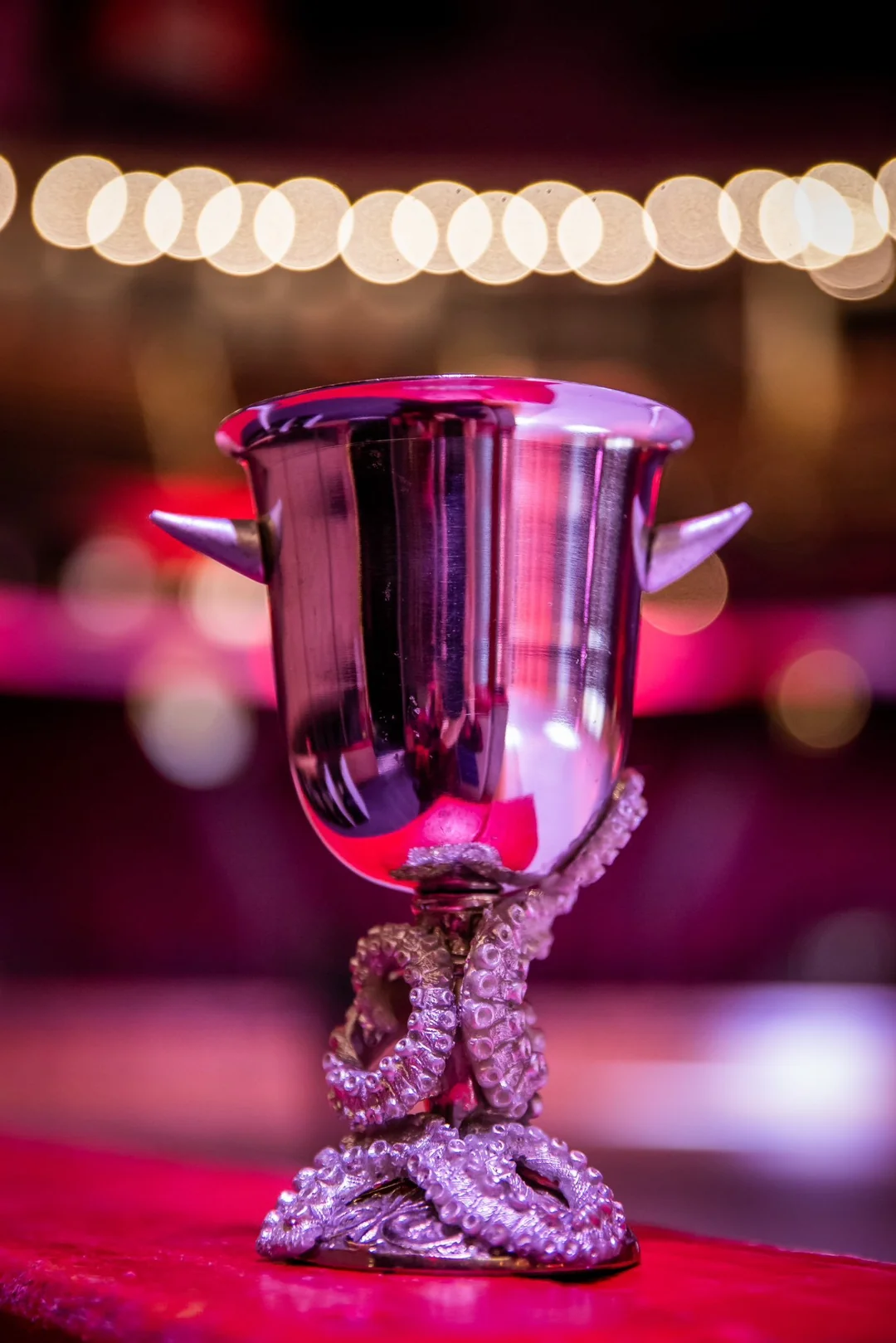
In an era where professional sports often feel dominated by analytics, contracts, and championship odds, some of the most enduring traditions are born not in boardrooms but in the imaginations of fans. Few recent examples capture that spirit better than the Cryptid Cup, an unofficial, proudly fictional prize contested whenever the New Jersey Devils and the Seattle Kraken share the ice. It carries no formal recognition from the league, no engraving from NHL headquarters, and no monetary value. Yet for two fan bases bonded by a love of folklore and fiercely loyal hockey culture, the Cryptid Cup has become a surprisingly meaningful badge of bragging rights.
The charm of the Cup begins with the names on the jerseys. New Jersey’s team draws its identity from the Jersey Devil, a legendary creature said to roam the Pine Barrens and woven deeply into the state’s folklore. Seattle counters with the Kraken, a mythical sea monster that has sailed through centuries of maritime legend. When these two franchises face one another, it feels less like a routine interconference matchup and more like a playful clash of myths, land versus sea, folklore versus folklore. Out of that shared mythology, the idea of a symbolic trophy emerged, giving each meeting an added layer of narrative beyond the standings.
The Cryptid Cup is not stored in a display case at Prudential Center or Climate Pledge Arena. It exists primarily in fan culture, social media banter, and the collective memory of past matchups. When one team defeats the other, supporters gleefully declare that their cryptid has “claimed the Cup,” holding onto that imaginary crown until the next time the teams meet. It is part joke, part tradition, and entirely driven by the communities that fill the arenas, tune in on television, and turn routine games into storylines that feel larger than a single night’s result.
For New Jersey fans, this playful rivalry fits naturally within the Devils’ broader identity. The franchise has long leaned into the mystique of its name, celebrating the darker, more mysterious edge of Garden State folklore while pairing it with a fast, modern brand of hockey. Coverage of the team across the state, including features tied to the Devils’ role in New Jersey sports culture, continues to highlight how this identity resonates beyond the rink and into community pride.
Seattle, meanwhile, has embraced the Kraken persona with remarkable speed since joining the league, weaving nautical themes and maritime legend into its branding and game-day presentation. The result is a rare interconference rivalry that feels both whimsical and oddly personal, especially for two fan bases that may not share a long playoff history but share a deep love of their teams’ distinctive personalities.
What makes the Cryptid Cup particularly appealing is that it asks nothing of the league and everything of the fans. There are no formal rules, no official ceremonies, and no governing body to validate it. Its value lies entirely in participation. When the Devils and Kraken line up for a faceoff, supporters on both sides know that something more than two points is at stake, even if that “something” lives mostly in the realm of imagination. The Cup gives meaning to games that might otherwise feel distant in the standings, turning them into personal contests filled with humor, pride, and a sense of shared mythmaking.
In a sport steeped in tradition, the Cryptid Cup represents a newer kind of legacy, one shaped by digital culture, fan creativity, and the desire to make every game feel special. It proves that even in the most structured professional leagues, there is still room for playful storytelling. For New Jersey and Seattle, every meeting is not just another entry on the schedule. It is a chance for folklore to take the ice, for cryptids to clash, and for bragging rights to travel thousands of miles until the next chapter of this delightfully imaginary rivalry is written.
New Jersey’s Narrow Escape Sparks Fresh Questions and Faint Hope at Prudential Center. A 10-day road swing can harden a team or unravel it, and for the New Jersey Devils, Wednesday night felt like a stress test for both their legs and their identity. Back inside Prudential Center, the Devils edged the Seattle Kraken 3–2 in overtime in a game that doubled as a measuring stick for where this season may be headed. The scoreboard said victory. The details beneath it told a more complicated, more revealing story about a team still searching for consistency but finally showing signs of cohesion.
The evening unfolded under an unusual backdrop. Before the puck even dropped, Devils management addressed the media in a rare, tightly watched press availability that underscored a simple but polarizing message: this group is staying intact. No dramatic shakeups, no public reshuffling of leadership, and no hint that sweeping changes are imminent. With 35 games remaining on the schedule, the math is daunting. A comfortable playoff pace requires something close to winning two out of every three games the rest of the way. That kind of surge feels ambitious, but for the first time in weeks, the Devils were finally skating with a lineup that resembled their original blueprint, creating a faint but noticeable sense of renewed optimism around the building.
That optimism found its on-ice voice through captain Nico Hischier, who delivered both regulation and overtime goals, anchoring a performance that reminded the league why he remains the heartbeat of this roster. Jack Hughes and Luke Hughes quietly stacked two assists apiece, continuing to validate the notion that New Jersey’s most dynamic talents are beginning to sync at the right moment.
The game itself leaned toward tight-checking, defense-first hockey. Both teams choked off neutral zone space, forcing possessions to die quietly along the boards and pushing most shot attempts to the perimeter. The Devils struck first when Cody Glass capitalized on a faceoff win, drifting into space and converting a rebound that briefly lifted the energy in the building. Seattle answered through former Devil Adam Larsson, who found daylight on a long-range attempt that slipped past Jacob Markstrom, evening the score and restoring the grinding tempo that defined much of the opening frame.
By the second period, the game finally cracked open. On a Devils power play, Hischier absorbed contact, stayed upright, and unleashed a shot that found its way through traffic, restoring New Jersey’s lead. The advantage did not last long. A Kraken power-play sequence exposed a loose rebound in front, and Seattle pounced, knotting the game again at two. Despite a late-period push that included strong possession time and a flurry of chances, the Devils couldn’t convert, sending the contest into a tense, scoreless third period where both teams tightened even further.
Seattle’s neutral-zone structure slowed New Jersey’s attack early in the final frame, but the Devils gradually found seams, generating chances from both their forward group and the blue line. Timo Meier, Dawson Mercer, and Dougie Hamilton each tested Philipp Grubauer, but the net stayed stubbornly sealed. Overtime loomed, and with it, the kind of open ice that often favors New Jersey’s speed.
Three-on-three play delivered drama in short order. A defensive miscue nearly tilted the game the other way, but Markstrom steadied himself, denying a Kraken break and keeping the Devils alive. Moments later, the puck transitioned through Luke Hughes to Jack Hughes, who spotted Hischier streaking through the slot. The captain sold forehand, slipped the puck to his backhand, and tucked it inside the near post to end the night in a roar of relief.
Beyond the highlight reel, the game also spotlighted several lingering narratives shaping New Jersey’s season. Hamilton, recently rotated out of the lineup, has responded with renewed urgency, playing sharper, faster, and with the kind of puck movement the Devils desperately need on their power play. Defensive depth remains fluid, and the organization appears open to managing minutes more creatively, a sign that internal adjustments may substitute for blockbuster trades.
At the same time, the fourth line continues to struggle to flip the ice, frequently pinned in the defensive zone and absorbing extended shifts that sap momentum. It is a problem that quietly undermines otherwise solid team-wide defensive metrics and may become a focal point as the season progresses.
For fans who track New Jersey’s broader sports identity, nights like this also reinforce the franchise’s place in the Garden State’s cultural landscape. Coverage of the Devils remains a pillar within Explore New Jersey’s sports and community reporting, including ongoing features connected to the team’s evolving role within the state’s sports fabric.
In the end, the Devils skated off with two points, but perhaps more importantly, with a flicker of belief. Their stars are producing, their structure is tightening, and their lineup finally resembles the version envisioned months ago. The question now is whether this overtime escape becomes a turning point or simply another brief surge in a season defined by unpredictability. The answer will not be found in one night, but in what follows over the next demanding stretch of games that will ultimately decide who this Devils team truly is.