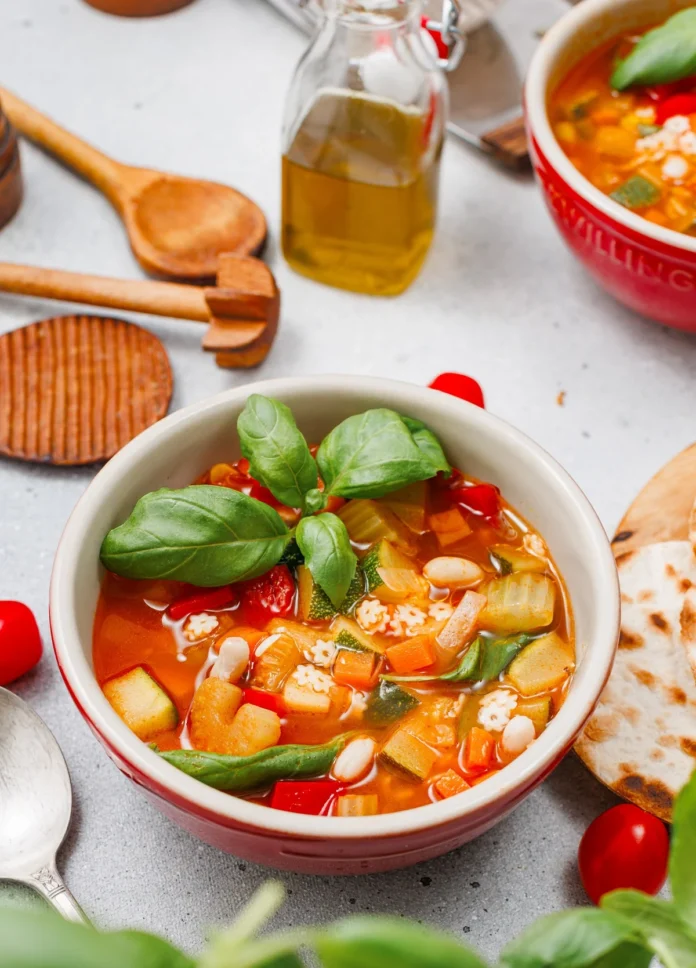

As cooler days settle in, few dishes feel as welcoming as a pot of homemade vegetable soup simmering on the stove. Built around simple ingredients and adaptable to nearly any pantry, this vegetable-forward soup delivers warmth, nourishment, and satisfying flavor in every spoonful. It is the kind of recipe that fits seamlessly into everyday cooking, offering both comfort and practicality without sacrificing depth.
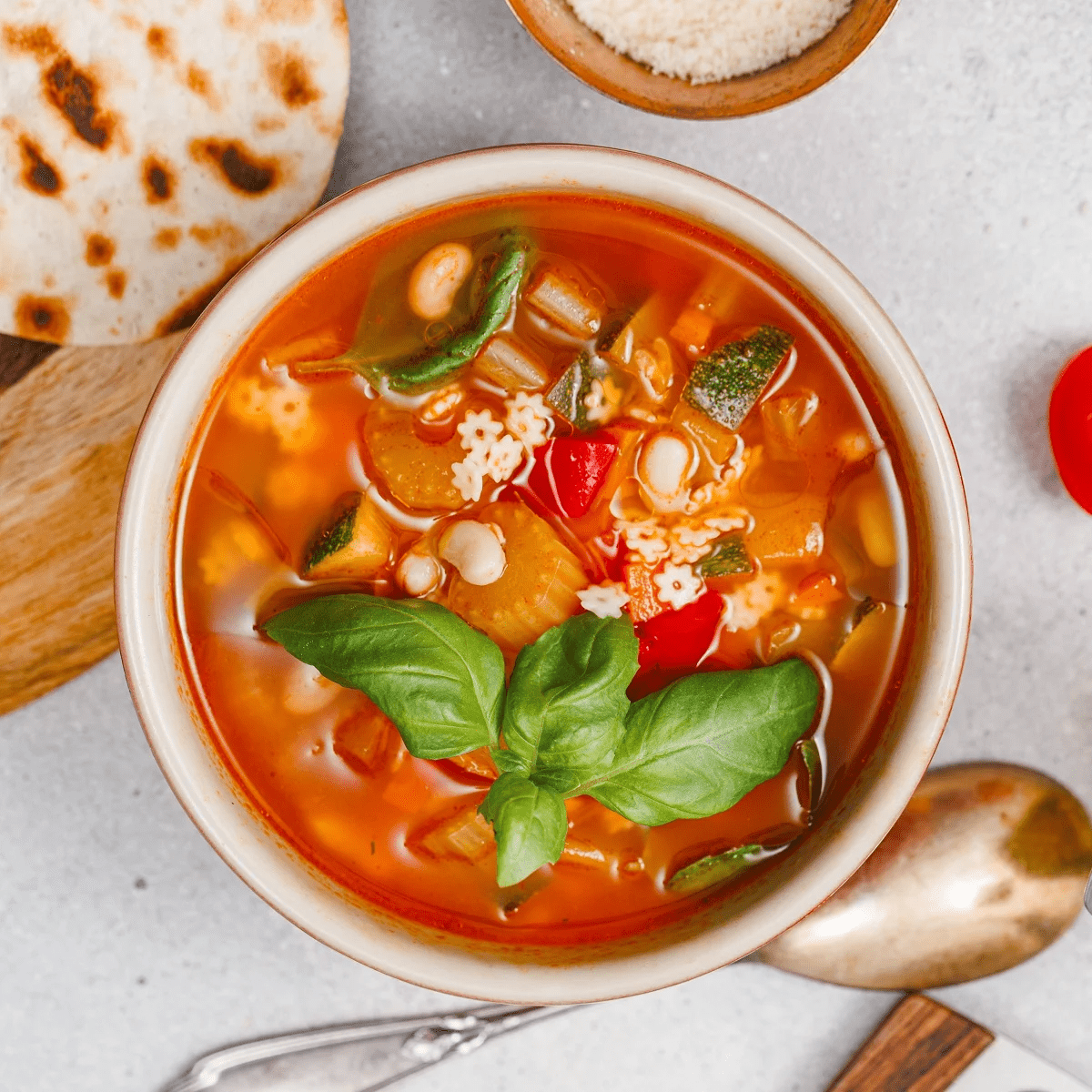
The foundation begins with good-quality extra virgin olive oil, which sets the tone for the dish with richness and aroma. Gently sautéed onions and freshly minced garlic create an inviting base, releasing their flavors slowly and evenly. From there, a colorful mix of vegetables takes center stage. Carrots and celery add classic sweetness and structure, while zucchini and red bell pepper contribute freshness and subtle contrast. Each vegetable plays a role, and when chopped to similar sizes, they cook evenly and harmonize beautifully.
Diced tomatoes and vegetable broth transform the sautéed vegetables into a cohesive soup, carrying the flavors while keeping the dish light yet satisfying. Dried herbs such as oregano, basil, and thyme infuse the broth with familiar, comforting notes. Using a low-sodium broth allows for better control over seasoning, ensuring the soup remains balanced rather than overly salty.
White beans, such as cannellini or great northern, provide protein and creaminess, making the soup hearty enough to stand on its own. Green beans add texture and a gentle bite, while small pasta shapes like ditalini or shells turn the soup into a complete meal. For those avoiding gluten, the pasta can be swapped for grains like quinoa or omitted entirely in favor of extra vegetables or legumes.
Just before serving, leafy greens such as spinach or kale are stirred in, wilting gently from the heat and adding both nutrition and vibrant color. A final garnish of fresh parsley brightens the dish, while grated Parmesan offers a savory finish for those who enjoy it. Plant-based alternatives or nutritional yeast work equally well, keeping the soup adaptable to different diets.
One of the strengths of this soup is its flexibility. Beans can be swapped for chickpeas or lentils, seasonal vegetables can be added or substituted, and a pinch of red pepper flakes can introduce gentle heat. For a richer texture, a splash of coconut milk or cashew cream at the end transforms the broth into something silkier without overpowering the vegetables.
The soup is best prepared in a heavy-bottomed pot or Dutch oven, which distributes heat evenly and prevents sticking. It stores exceptionally well, making it ideal for meal prep. Leftovers keep for several days in the refrigerator and freeze beautifully, offering a ready-made meal on busy nights. When reheating, a small splash of broth restores the soup’s original consistency.
Served with crusty bread, a simple salad, or enjoyed on its own, this vegetable soup is a reminder that nourishing food does not need to be complicated. It fits naturally into the rhythm of home cooking, whether made as a weeknight dinner or a weekend batch to enjoy throughout the week.
Recipes like this highlight why home cooking continues to resonate across New Jersey kitchens. For more seasonal dishes, comforting classics, and everyday inspiration, Explore New Jersey’s recipes section showcases ideas that celebrate flavor, simplicity, and the joy of cooking at home.
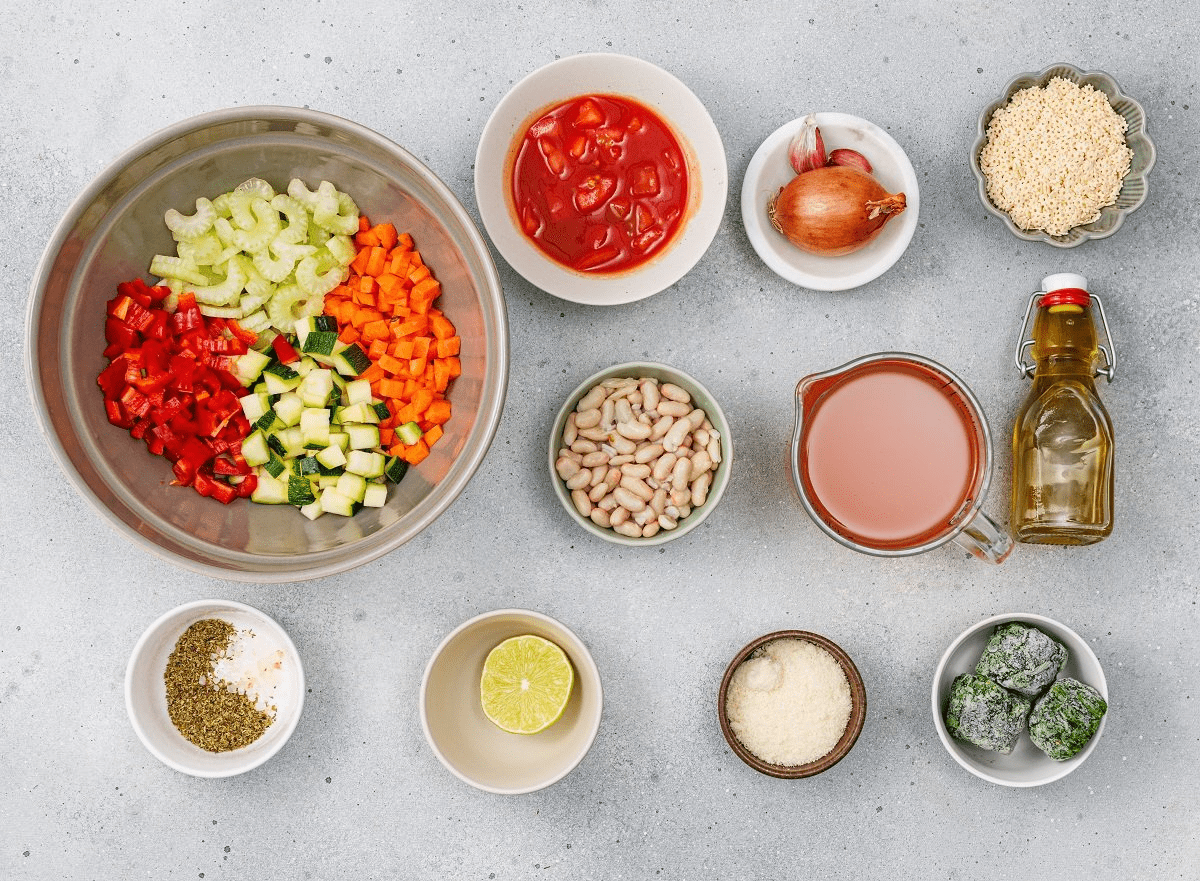
- Olive Oil – Use a good-quality extra virgin olive oil for the best flavor. You can substitute avocado oil or another mild cooking oil if preferred.
- Onion – Yellow or white onions work well for a balanced flavor. Dice evenly for consistent cooking.
- Garlic – Finely minced fresh garlic cloves give the best taste.
- Carrots – Choose firm, brightly colored carrots. Peel if desired and chop into uniform pieces.
- Celery – Look for crisp stalks with bright green color. Slice evenly to match the other vegetable pieces.
- Zucchini – Choose small to medium zucchini for tender texture.
- Red Bell Pepper – Pick a pepper with smooth, shiny skin. Orange or yellow peppers can be used for a milder flavor.
- Diced Tomatoes – Use canned tomatoes for convenience, or substitute with fresh tomatoes when in season. Fire-roasted canned tomatoes add a smoky depth.
- White Beans – Cannellini or great northern beans work well. Rinse and drain canned beans, or cook dried beans ahead of time.
- Green Beans – Fresh beans should be bright and firm; frozen beans are a great substitute. You can use canned beans, but drain them well and add them later in cooking to prevent them from getting mushy.
- Small Pasta – Ditalini, elbow or small shells are ideal. Use gluten-free pasta for a gluten-free version, or omit pasta and add more beans or vegetables.
- Vegetable Broth – Choose a low-sodium broth so you can control the salt level. Homemade broth gives the richest flavor.
- Dried Herbs – Dried oregano, basil and time add lots of flavor. If using fresh herbs, double the amount.
- Salt and Black Pepper – Salt and pepper add depth and enhance the flavor. Adjust to taste, adding more at the end if needed.
- Spinach or Kale – Fresh or frozen both work well. Remove tough stems from kale before chopping.
- Fresh Parsley – Adds freshness at the end. Use flat-leaf for a stronger flavor, curly for a milder one.
- Grated Parmesan – This is optional but you can also use vegan Parmesan or nutritional yeast to keep the recipe plant based .
- Heat olive oil in a large pot over medium heat. Add the onion and garlic, sauté for 2–3 minutes until fragrant.
- Add the carrots, celery, zucchini, and bell pepper. Cook for about 5 minutes, stirring occasionally.
- Stir in the diced tomatoes and vegetable broth. Add oregano, basil, thyme, salt, and pepper. Bring to a boil.
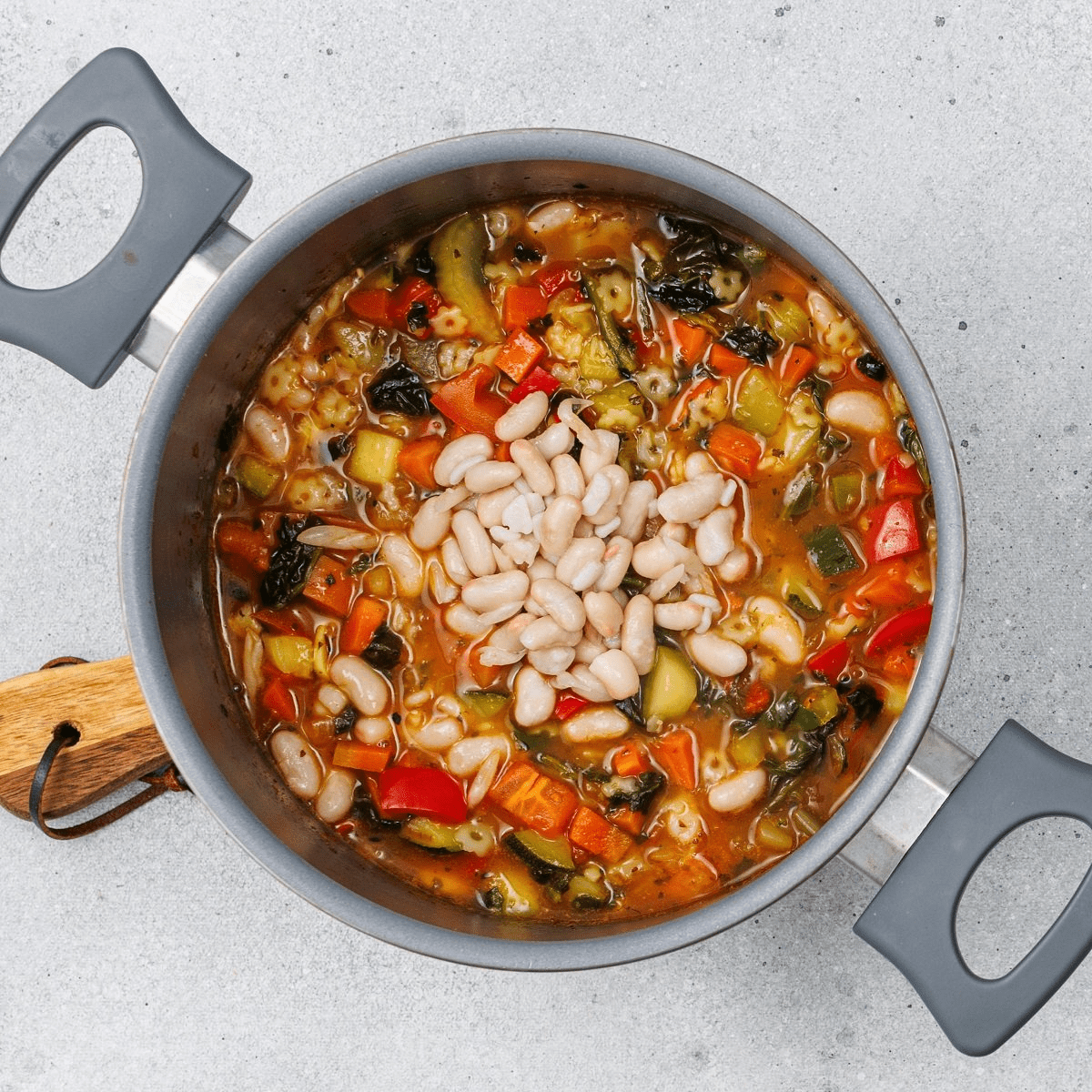
- Reduce the heat and let simmer for 10 minutes. Then, add the white beans, green beans, and pasta. Cook for another 10 minutes or until the pasta and veggies are tender.
- Stir in the fresh or frozen spinach/kale and cook for 2 more minutes until wilted.
- Taste and adjust seasoning if needed. Serve hot, garnished with fresh parsley and grated Parmesan if desired.
Store leftover soup in an airtight container in the refrigerator for up to 4 days. For longer storage, let it cool completely and freeze in freezer-safe containers for up to 3 months.
When reheating, warm gently on the stovetop over medium heat, adding a splash of broth or water if the soup has thickened. If reheating from frozen, thaw overnight in the refrigerator before warming.
This soup pairs beautifully with a variety of sides for a complete meal. Serve it with warm, crusty bread like this cheesy mini loaf beer bread or crunchy toppers such as homemade baked sourdough croutons—both are not vegan, but you can easily make or purchase plant-based versions. For lighter accompaniments, try a hummus veggie wrap, a crisp shaved Brussels sprouts salad with maple vinaigrette, or a refreshing crunchy romaine salad with fennel. This is a Jery Girl Cooks recipe.