
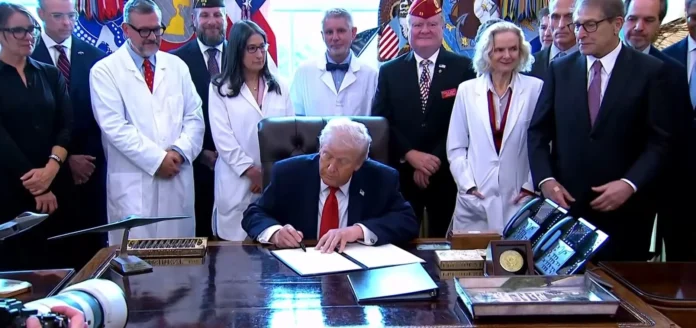

New Jersey’s cannabis industry is entering a new era following President Donald Trump’s Dec. 18 signing of a sweeping executive order directing the federal government to finalize the rescheduling of marijuana. The move shifts cannabis from the highly restrictive Schedule I category, alongside heroin and LSD, to the less restrictive Schedule III, alongside substances such as Tylenol and certain steroids. While this does not legalize cannabis nationwide or override state laws, it could have significant effects on New Jersey dispensaries, medical research, and business operations.
Under current federal law, cannabis is classified as having “no accepted medical use” and a “high potential for abuse,” creating barriers to research, banking, and taxation for state-licensed businesses. Reclassification to Schedule III allows operators to deduct ordinary business expenses from federal taxes, a major relief under Section 280E, and may encourage banks and financial institutions to engage with licensed cannabis businesses. This could provide critical financial stability for New Jersey dispensaries and cultivators while attracting new investment into the state’s rapidly growing cannabis market.
Medical and scientific research also stands to benefit. Schedule I restrictions have historically imposed extensive federal bureaucracy on researchers, delaying clinical studies and new treatment development. With cannabis in Schedule III, universities, pharmaceutical companies, and medical institutions in New Jersey can conduct research more efficiently, potentially accelerating clinical trials for cannabis-derived medications and CBD-based therapies.
For dispensaries such as Blue Violets in Hoboken, which recently launched e-bike delivery services, rescheduling creates opportunities for business expansion and investor confidence. Industry leaders describe the change as stabilizing, allowing companies to plan for growth while maintaining compliance in a state-regulated environment. JRSY Girl Growers, a Class I cultivator and soon-to-launch Class II manufacturer in Ocean Township, anticipates that rescheduling will restore investor confidence and facilitate recapitalization efforts, further boosting the local market.
Despite the positive effects, experts note that rescheduling does not equal full federal legalization. Cannabis remains a controlled substance, interstate commerce remains prohibited, and existing criminal penalties are not automatically erased. Comprehensive reform, including decriminalization and descheduling, would still require congressional action. Nevertheless, state-licensed businesses in New Jersey may see immediate benefits, including eased regulatory burdens, access to banking services, and relief from punitive tax restrictions.
The executive order also addresses access to CBD-based treatments for seniors on Medicare, a potential milestone for patient care that could begin as soon as April 2026. Advocates see the signing as overdue recognition of cannabis’s medical potential and an opening for continued evolution of state-level regulations.
New Jersey, already a leader in East Coast cannabis policy, could experience significant growth in investment, research, and retail activity as federal restrictions ease. Readers interested in tracking the evolving cannabis market, including legal, financial, and real estate implications for dispensaries and cultivation facilities, can follow Explore New Jersey’s Real Estate section.
For New Jersey’s cannabis industry, Trump’s executive order marks a historic turning point. While it does not resolve all legal and social inequities associated with prohibition, it offers tangible benefits for state-licensed businesses, investors, researchers, and patients, signaling a major step toward integrating cannabis into mainstream commerce and medical practice.
















