
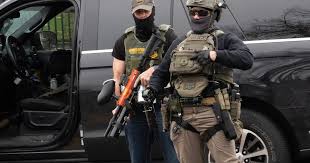

Trenton lawmakers are advancing legislation that would significantly change how law enforcement officers interact with the public in New Jersey by restricting when officers can conceal their identities while performing official duties. The move has drawn sharp attention from civil liberties advocates, law enforcement groups, and legal experts, setting up a potential debate over public safety, transparency, and constitutional limits.
The proposal, known as the “Law Enforcement Officer Protection Act,” recently cleared a key legislative committee and now moves through the State House for further consideration. Under the measure, officers at all levels — including local police, county sheriffs, state investigators, and even federal agents operating within New Jersey — would be required to show their faces and identify themselves before detaining or arresting a person. The legislation is championed by Assembly members who argue that visible identification promotes trust and reduces community tension during police interactions. Assembly Democrats
Proponents of the bill contend that seeing a uniformed officer’s face and knowing the agency they represent fosters mutual respect and reduces misunderstandings in tense situations. Assembly sponsors have emphasized that clear identification can reassure residents, particularly in diverse and immigrant communities, who may feel uneasy when approached by officers whose faces are obscured. The Jersey Vindicator
However, the scope of the bill extends beyond identification requirements. It also includes language that would prohibit law enforcement officers from wearing masks or any disguises while interacting with the public unless specific exceptions apply. Exemptions written into the legislation would cover undercover operations, protective face shields that do not obscure identity, medically necessary masks backed by a physician’s statement, and masks used for protection from smoke in declared emergencies. Violations of the provision would be classified as a disorderly persons offense, carrying potential fines and jail time, underscoring the seriousness with which the Legislature is approaching enforcement. New Jersey Legislature+1
Supporters maintain that the rule against masked interactions targets misuse of anonymity in official duties, including instances where federal personnel operating in the state may conceal their faces during sensitive operations. They assert that stronger visibility standards will make it easier for members of the public to distinguish legitimate law enforcement from impersonators, a concern lawmakers say has increased amid reports of individuals misrepresenting themselves as officers. New Jersey Monitor
Critics of the measure raise a host of concerns. Some law enforcement professionals caution that limiting face coverings could compromise officer safety in high-risk assignments where anonymity is essential. Others worry about potential legal challenges, especially where the bill’s restrictions would apply to federal agents; constitutional scholars note that states generally lack authority to regulate federal operations, opening the measure to court challenges if enacted. New Jersey Monitor
Civil liberties advocates also argue that such a mandate could have unintended consequences beyond policing. They note that masks and face coverings serve legitimate purposes — from medical protections to religious observance — and that blanket restrictions tied to law enforcement could set precedents affecting public interaction rights more broadly.
As the conversation unfolds in Trenton, New Jersey’s legislative session is likely to see extensive testimony from law enforcement officials, civil rights organizations, and community representatives. The bill’s journey through successive committee votes and potential amendments will be closely watched by stakeholders across the state.
Readers interested in developments related to policing, public safety, and legislative action throughout New Jersey can find continued tracking and reporting in Explore New Jersey’s Law & Order section.
The outcome of this bill will influence not only how officers approach civilian encounters but also how New Jersey balances transparency, safety, and civil liberties in law enforcement policy.
















