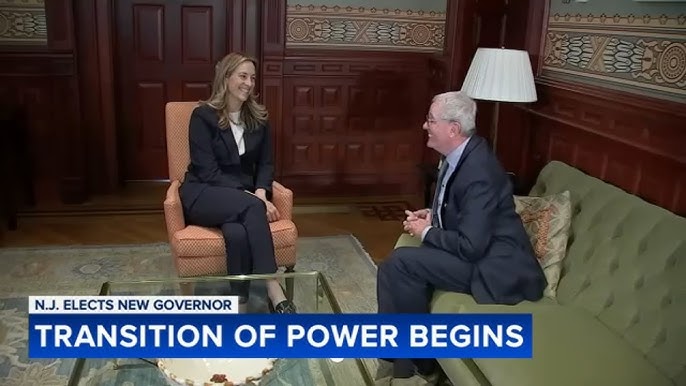

As New Jersey prepares for a change in leadership, Governor-elect Mikie Sherrill’s transition team is laying the groundwork for one of the most ambitious state agendas in recent memory. Her incoming administration is zeroing in on the challenges that define day-to-day life for residents—sky-high housing costs, rising utility bills, infrastructure strain, and a budget system that has struggled for decades to keep pace with economic realities. With planning teams already assembled, outreach to policy experts underway, and a clear roadmap emerging, the state is bracing for an assertive first year that aims to reset how New Jersey balances opportunity, affordability, and long-term stability. For those tracking these developments, ongoing coverage can be found in our section dedicated to politics.
The new administration is centered on a few core priorities designed to reshape how government functions and who it serves. Fiscal responsibility is front and center, not as a budgetary buzzword, but as a response to long-standing obligations that now threaten economic flexibility. New Jersey’s structural deficit, pension liabilities, and historically shallow rainy-day reserves have limited the state’s ability to make large-scale investments; Sherrill has made clear that stabilizing the financial foundation is essential for every other policy goal.
Affordability remains the driving theme. New Jersey families consistently rank housing, healthcare, and utility costs as their biggest concerns, and the Governor-elect has positioned her administration as one committed to giving residents tangible relief. That includes a sweeping approach to housing policy, stronger consumer protections, and a rethinking of how the state delivers services to working families.
One of the most closely watched planks of the incoming agenda is housing. The administration plans to expand supply statewide, reduce construction bottlenecks, and spur investment where it is most needed. Incentives for builders, streamlined permitting, and technical support for local governments are expected to accelerate new development. A stronger push for transit-oriented development is also underway, with the administration viewing train and bus hubs as anchors capable of revitalizing downtown corridors while adding diverse housing options—including accessory dwelling units, duplexes, townhomes, and other “middle housing” types that have long been missing from many communities.
The administration is also focusing on increasing access to homeownership, especially for first-time buyers squeezed out of the market by rising prices. Updates to existing down-payment assistance programs, reduced wait times for applicants, and safeguarding the Affordable Housing Trust Fund are all designed to ensure that aspiring homeowners can actually take advantage of the state’s resources. Tenant protections will gain new force as well, with the Attorney General set to target predatory landlords, illegal rent-setting schemes, and discriminatory practices that have compounded the affordability crisis for renters across the state.
Energy policy is expected to reshape households’ monthly bills even faster. Sherrill’s promise to declare a state of emergency on utility costs on her first day in office is one of the boldest commitments in the transition plan. That declaration would freeze average residential utility rates for a full year—giving families immediate relief while the administration works on deeper structural reforms. Those longer-term efforts include expanding New Jersey’s capacity for cleaner and more cost-efficient power sources such as solar generation, battery storage projects, and modernized natural gas and nuclear facilities. The administration also intends to challenge the regional grid operator, PJM, over decisions alleged to have contributed to the state’s elevated energy prices.
Alongside affordability, the administration is setting the stage for a renewed push for government transparency. A redesigned, plain-language state budget would show residents exactly where money is being spent. Expanded tax credits, including enhancements to the Child Tax Credit and Earned Income Tax Credit, aim to support working families while providing direct relief. One of the largest cost-drivers for local governments—the State Health Benefits Program—will undergo a top-to-bottom audit to identify overpayments and bring spending under control, easing pressure on property taxpayers.
Healthcare, education, and workforce development form another major pillar of the new administration. With federal shifts looming that could affect Medicaid funding, New Jersey is preparing strategies to shield vulnerable populations. Children’s mental health, online safety, learning recovery, and persistent teacher shortages in STEM and special-education fields all require new approaches. The administration is also focusing heavily on aligning higher education and training programs with the state’s evolving labor market, recognizing that New Jersey’s long-term competitiveness depends on a skilled, adaptable workforce. Strengthening the childcare system—which Sherrill links directly to labor-force participation—will be central to that effort.
Economic development is also expected to receive renewed emphasis. Support for small, minority-owned, and women-owned businesses will be crucial as the state prepares for major global events like the upcoming World Cup. Ethical oversight of artificial intelligence, modernization of state agencies, and improved management of technological innovation are cornerstones of the administration’s plan to ensure that economic growth benefits local communities rather than only large corporate interests.
Intergovernmental diplomacy will play a significant role as well. The incoming Governor will need to build close working relationships with legislative leaders and stay responsive to federal policy shifts that could meaningfully alter the state’s budget. Effective coordination will be essential for advancing an agenda as comprehensive as this one.
To organize these efforts, the Governor-elect has launched a transition platform with opportunities for residents and professionals to apply for roles in the new administration, drawing expertise from across the state and ensuring broad representation in policy development.
New Jersey enters this new era with immense challenges but also enormous potential. The Sherrill administration is positioning itself as a government willing to confront long-standing problems head-on, with affordability, accountability, and measurable relief at the core of its mission. Whether addressing housing shortages, energy instability, or economic opportunity, the next four years promise to redefine the conversation about what leadership in New Jersey can look like.