
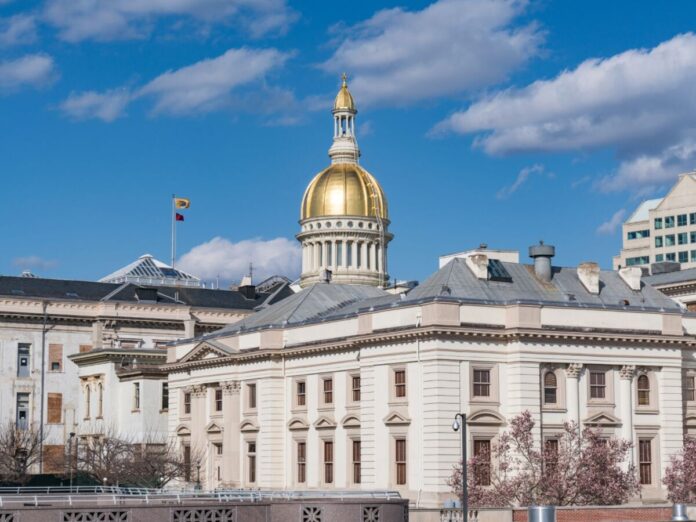

New Jersey’s political sphere is undergoing a period of rapid movement and heightened tension as 2025 draws to a close. From a hard-fought mayoral showdown in Jersey City to escalating debates in Trenton over the future of government oversight, the state’s leaders are navigating a week marked by significant change and growing scrutiny. Explore New Jersey continues to follow these developments closely through our dedicated Politics coverage.
One of the most closely watched contests this week ended with a decisive upset: Jersey City Councilman James Solomon defeated former Governor Jim McGreevey in the city’s mayoral runoff election, ending McGreevey’s attempt at a full political comeback. Solomon’s campaign centered on strengthening affordability, housing access, and transparency in municipal government—messages that resonated strongly in one of the state’s fastest-growing and most economically pressured cities. His victory signals that Jersey City voters favored a forward-facing agenda rather than a return to traditional establishment politics.
In Trenton, a separate political battle is brewing over a controversial proposal that would significantly weaken the authority of the State Comptroller’s Office. The legislation, which aims to shift key powers and responsibilities to another agency, quickly became one of the most polarizing issues of the lame duck session. Critics argue that the bill would dismantle a crucial layer of government accountability. Among those voicing opposition is U.S. Sen. Andy Kim, who testified that the measure highlights the very “broken politics” he has long criticized in state governance. His comments intensified a debate that has drawn both statewide and national attention, elevating public concern about the future of oversight and anti-corruption safeguards.
Amid the policy tensions, Governor-elect Mikie Sherrill is forging ahead with her transition, emphasizing efficiency and structural modernization across state operations. Her appointment of Kellie Doucette as the state’s first chief operating officer marks a historic shift in how the governor’s office will manage day-to-day responsibilities. By creating a new role centered on operational continuity and streamlined processes, Sherrill aims to set an early tone for a more agile, responsive administration intent on reducing government bottlenecks.
Across the aisle, Republicans are preparing for their own leadership decisions. The New Jersey GOP will convene on January 5, 2026, to elect its next state party chair—an election widely viewed as pivotal for shaping strategy heading into a consequential federal and statewide election cycle. With the party seeking to redefine its footing in a state dominated by Democrats, the chair race has drawn significant attention from both grassroots members and party veterans.
Elsewhere around the state, a series of legal and local-government stories are also commanding attention. Governor Phil Murphy is urging Indian officials to cooperate in the extradition of a suspect wanted in connection with a 2017 double homicide in Burlington County, a case that has resurfaced as international diplomatic discussions continue. In Lumberton, the township mayor now faces child endangerment and abuse charges, prompting calls for immediate accountability and raising questions about municipal oversight.
Meanwhile, a state Senate committee advanced legislation that would impose new limits on the rulemaking authority of state agencies. Supporters argue the bill would create more legislative involvement in regulatory decisions, while critics warn it may slow down essential government functions and weaken the state’s ability to respond swiftly to emerging issues.
The race to fill Governor-elect Sherrill’s congressional seat (NJ-11) is also intensifying, with multiple candidates already entering or exiting the contest. In a notable development, the Passaic County Democratic Committee issued a rare dual endorsement for two contenders: Passaic County Commissioner John Bartlett and Lieutenant Governor Tahesha Way. Way emphasized her track record on affordability, voter access, and resisting federal overreach when addressing supporters, positioning herself as a seasoned leader prepared to deliver on behalf of working families.
In South Jersey, Collingswood officials remain deeply split over whether the borough should contract Virtua Health EMTs to ease rising pressures on local first responders. Fire Chief Geoff Joyce detailed the mounting strain on firefighter-EMTs, citing rising call volumes and plummeting morale. The debate took a sharp turn when Commissioner Jim Maley argued that Mayor Daniela Solano-Ward should have recused herself from voting on the contract after speaking with her husband—a Virtua physician—during the bid process. The dispute highlights the complex intersection of public safety needs, ethics considerations, and local governance.
Taken together, the week’s events paint a portrait of a state grappling with change—from shifts in political power to difficult questions about accountability and public service. New Jersey’s political leaders are navigating a landscape where every decision, endorsement, and vote carries significant implications for residents across all 21 counties. Explore New Jersey will continue to follow these evolving stories as the next phase of the state’s political journey unfolds.
















