
As the Winter Games unfold in northern Italy, the global hockey spotlight has drifted far from Newark, South Philadelphia, and the nightly grind of the NHL season. But make no mistake — the 2026 Winter Olympics in Milano-Cortina are carrying a distinctly New Jersey imprint, and for fans across the Garden State, the tournament is doing far more than showcasing star power. It is quietly reshaping expectations for what the New Jersey Devils must become when league play resumes.
Between the Devils and the Flyers, two of the region’s most followed franchises are heavily represented on the international stage, with players skating for multiple medal contenders and logging meaningful roles in pressure-filled games that mirror the intensity of the Stanley Cup Playoffs. For New Jersey, the implications stretch well beyond national pride. This tournament is offering a real-time measuring stick for leadership, resilience, and elite-level execution — exactly what the Devils will need after a turbulent stretch that sent them into the Olympic pause searching for answers.
The Devils arrive at the international showcase with one of the deepest organizational footprints in the tournament. Eight players are competing for five different nations, placing the franchise among the most visible NHL teams in Milano-Cortina.
Jack Hughes is anchoring the United States attack, bringing the same speed-driven, high-possession style that defines his game in Newark to a roster stacked with young offensive firepower. His ability to generate controlled zone entries and create offense in transition has already been a central storyline for Team USA, and for the Devils, his performance against top international defenders offers a valuable preview of how his game continues to evolve against elite competition.
Sweden features a powerful Devils tandem in Jesper Bratt and Jacob Markström. Bratt’s creativity on the wing remains a critical offensive weapon, especially in tight-checking international matchups where space disappears quickly. Markström, meanwhile, carries one of the heaviest workloads of any Devils representative, tasked with stabilizing a Swedish team built on structure, defensive discipline, and goaltending reliability. For a New Jersey club that has wrestled with consistency in its own zone, watching Markström command games on the Olympic stage reinforces how essential calm, veteran goaltending becomes when momentum swings violently.
Switzerland may be the most compelling Devils storyline in Italy. Nico Hischier is wearing the captain’s “C” for his home country, a responsibility that extends far beyond the score sheet. His deployment in defensive matchups, late-game situations, and leadership moments reflects precisely why the Devils continue to view him as the emotional and tactical backbone of the organization. Alongside Hischier, Timo Meier brings a physical, north-south scoring presence that has translated well to Olympic play, while Jonas Siegenthaler anchors the blue line with shutdown minutes that rarely make highlight reels but frequently determine outcomes.
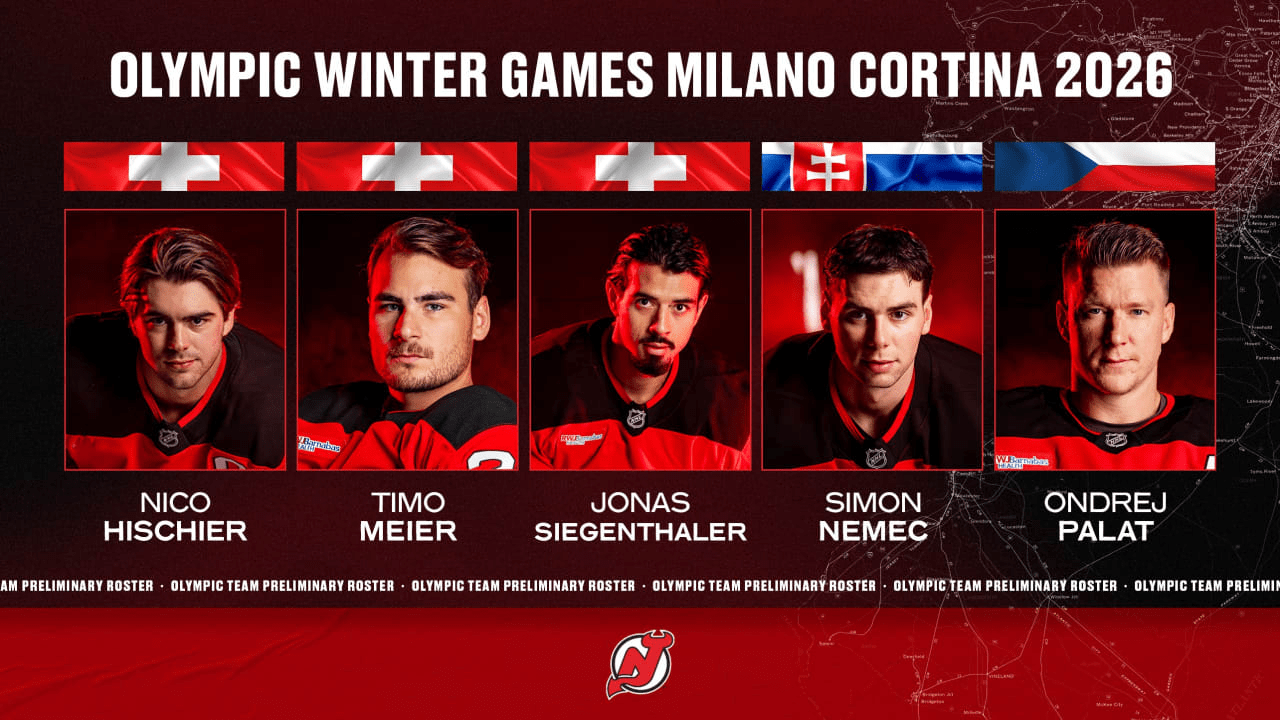
Slovakia is being represented by Šimon Nemec, whose Olympic experience arrives at a pivotal moment in his professional development. Facing veteran international forwards in high-stakes games accelerates a learning curve that no training camp can replicate. For New Jersey, his growth in puck management and defensive reads during this tournament could directly influence roster decisions down the stretch.
Czechia rounds out the Devils contingent with Ondřej Palát, whose championship experience and situational awareness continue to define his value. In a tournament where one mistake can end a medal run, Palát’s composure and understanding of pace control stand out — traits the Devils have relied on repeatedly during postseason pushes.
While the Devils dominate the local Olympic footprint, the Philadelphia Flyers are also carving out their own presence in Milano-Cortina, adding another layer to the regional narrative that resonates strongly throughout South Jersey.
Travis Sanheim is logging heavy minutes for Canada, deployed in all situations and trusted to manage transitions against the world’s fastest forwards. Rasmus Ristolainen is providing Finland with a physically imposing defensive option, particularly effective along the boards and in net-front battles. Czechia’s crease belongs to Dan Vladař, whose steady positioning and rebound control have kept his team competitive in tightly contested matchups.

The Flyers’ Olympic involvement extends behind the bench as well. Rick Tocchet, the club’s head coach, is serving as an assistant coach for Team Canada, offering strategic input and player management at the highest international level. That experience — navigating short tournaments, compressed schedules, and intense media pressure — will likely carry tangible benefits when the Flyers return to NHL competition.
Not every selection was able to take the ice. Forward Rodrigo Ābols was chosen to represent Latvia but remains sidelined due to injury, an unfortunate absence in a tournament that can define careers.
For New Jersey fans, this unprecedented concentration of Olympic involvement arrives at a delicate moment for the Devils. The team entered the break in a precarious position after a sobering 3–0 home loss to the Columbus Blue Jackets at Prudential Center — a performance that exposed familiar problems in offensive execution, defensive coverage, and emotional response when games begin to tilt.
The shutout loss was not simply about missed chances. It reflected a club that struggled to establish pace through the neutral zone, failed to sustain pressure in the offensive end, and too often relied on individual skill rather than structured support. Those issues cannot be solved by rest alone.

The contrast between the Olympic stage and the Devils’ most recent NHL showing is stark. In Milano-Cortina, Devils players are thriving within disciplined systems that demand rapid decision-making, responsible puck support, and relentless defensive accountability. When NHL play resumes, several Devils will be returning not only physically refreshed but mentally recalibrated by the expectations of international competition.
That shift places a new spotlight on who must elevate their play after the Olympic pause.
Jack Hughes, despite his status as a franchise centerpiece, faces renewed pressure to drive five-on-five offense when defensive matchups tighten. His Olympic deployment against top lines should sharpen his ability to manipulate defenders without forcing plays through traffic — a skill that will be essential if the Devils want to convert possession into consistent scoring.
Nico Hischier’s leadership responsibilities with Switzerland only amplify the expectations waiting for him in Newark. The Devils will need his line to control tempo, neutralize opposing top units, and set the emotional tone for games that increasingly feel like must-wins. His performance in Italy reinforces how central his presence remains to New Jersey’s identity.

Jesper Bratt and Timo Meier both return with opportunities to redefine the Devils’ secondary scoring narrative. Bratt’s chemistry with international linemates highlights how effective he becomes when play flows through him rather than around him. Meier’s willingness to attack the interior of the ice and engage physically will be critical for a Devils roster that has occasionally been too perimeter-oriented.
On the blue line, Jonas Siegenthaler and Šimon Nemec emerge from the tournament carrying valuable lessons in gap control, puck retrieval efficiency, and situational discipline. New Jersey’s defensive structure has too often unraveled under extended pressure. The habits reinforced in Olympic play — particularly when protecting narrow leads — could stabilize a group that remains one of the most scrutinized elements of the Devils’ roster.
Goaltending remains the variable that will ultimately shape the Devils’ ceiling. Watching Jacob Markström manage international pressure, traffic, and rebound chaos offers a timely reminder that elite goaltending is not about highlight saves alone, but about calming a bench and erasing momentum before it spirals.
Beyond individual performances, the Olympic break provides the Devils with something that is far harder to manufacture during the regular season: perspective. Competing in a condensed tournament where every shift carries disproportionate weight mirrors the intensity of playoff hockey far more closely than the standard 82-game schedule. For a Devils team still trying to define its competitive edge, that exposure could prove transformative.
As the Olympics continue and New Jersey’s representatives push for medals across five nations, Devils fans are witnessing their core players tested under the most unforgiving conditions the sport can offer. That experience, paired with the urgency created by their recent loss to Columbus, sets the stage for a pivotal stretch of hockey back home.
For readers following the broader regional hockey landscape — including how these Olympic storylines intersect with both New Jersey and Philadelphia franchises — continued coverage and analysis can be found through Explore New Jersey’s in-depth reporting on the local and national game within its comprehensive hockey coverage.
When NHL play resumes, the Devils will not be judged by how many of their players skated in Milano-Cortina. They will be judged by whether the discipline, confidence, and urgency forged on Olympic ice finally translate into consistent, structured wins at Prudential Center — and whether this uniquely international moment becomes the turning point in a season that still hangs in the balance.
The preliminary round for men’s ice hockey at the 2026 Winter Olympics begins on Wednesday, Feb. 11.
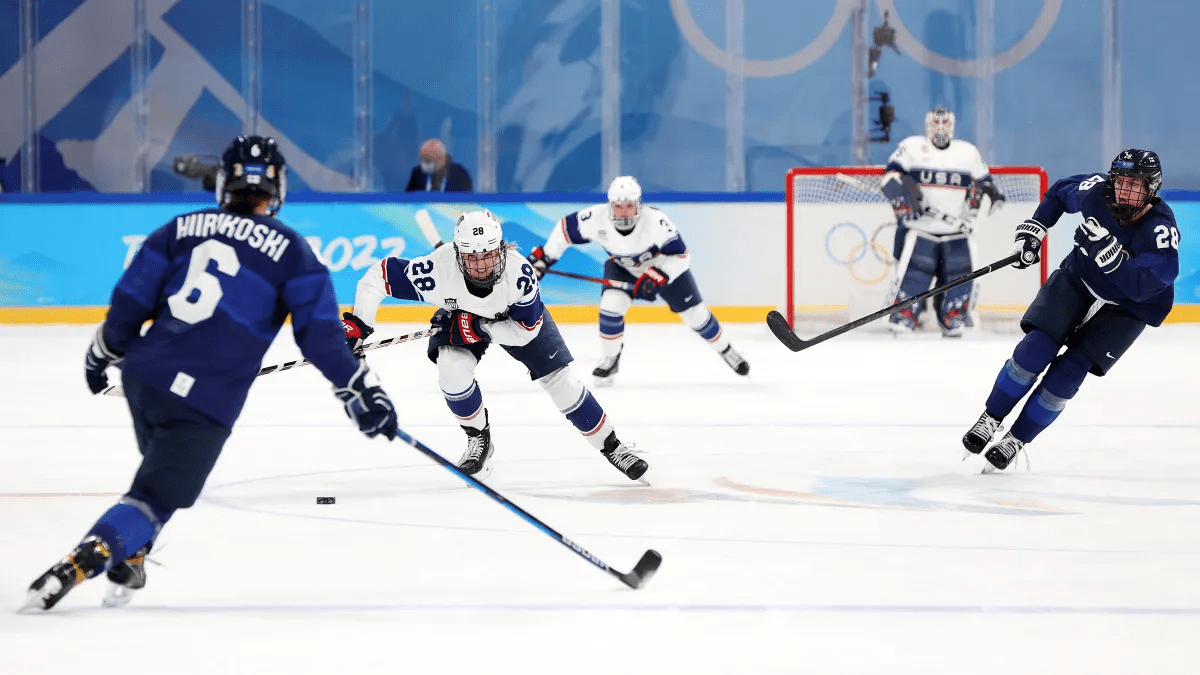
New Jersey’s Women Are Powering the Olympic Hockey Stage. As the 2026 Winter Games unfold in Milano-Cortina, the women’s hockey tournament is delivering one of the most meaningful New Jersey stories on the entire Olympic schedule. Across multiple national teams—and even extending into the upcoming Paralympic competition—athletes with deep roots in the Garden State are shaping outcomes, wearing leadership letters, and carrying the identity of a region that has quietly become one of the most reliable incubators of elite women’s hockey in the United States.
What is happening in Italy is not a coincidence. It is the result of decades of youth programs, prep school pipelines, and regional development systems that have steadily elevated New Jersey’s presence in the women’s game. Now, that infrastructure is visible on the global stage.
Few players symbolize that progression more clearly than Alex Carpenter, a Morristown native and one of the emotional anchors of Team USA. Serving as an alternate captain, Carpenter has already left her imprint on the tournament by scoring the opening goal of the Americans’ Olympic campaign during a convincing 5–1 victory over Czechia. For a team built around speed, layered pressure, and relentless forechecking, Carpenter’s ability to read space and finish from high-danger areas has immediately reasserted her role as a difference-maker.
But the significance of Carpenter’s presence goes well beyond her first goal. Her leadership role reflects the broader trust placed in New Jersey-developed players at the highest levels of international competition. In tight Olympic environments where line matching and situational awareness define success, the fact that a Morristown product is part of the leadership core speaks volumes about the maturity and tactical intelligence cultivated within the state’s hockey culture.
The American roster also features a familiar name for fans across the Northeast in goaltender Aerin Frankel. Although originally from New York, Frankel’s professional career with the Boston Fleet in the Professional Women’s Hockey League has made her one of the most visible and respected goaltenders within the region’s elite women’s hockey circles. Her technical foundation, calm tracking, and ability to manage second-chance opportunities have positioned her as one of the tournament’s most reliable netminders.
For New Jersey’s hockey community, Frankel represents a different—but equally important—connection to the state’s ecosystem. The cross-border development model that links New Jersey, New York, and Massachusetts has become increasingly important to sustaining high-level women’s programs. Frankel’s continued rise underscores how regional collaboration has helped elevate the competitive standard of women’s hockey throughout the Northeast.
While the United States remains one of the tournament favorites, New Jersey’s Olympic story does not stop with the traditional powers.
One of the most compelling narratives belongs to Jacquie Pierri, a Montclair native and Montclair High School graduate who is skating for host nation Italy. Pierri’s journey is emblematic of how international eligibility and professional opportunities are expanding pathways for American-born players with global ties. After playing professionally in Italy since 2021, she has become an integral part of the national program and now finds herself competing on home ice for the host country in the sport’s biggest showcase.
For Italian hockey, Pierri’s presence brings a level of experience and composure that is invaluable for a developing national program facing far deeper and more established opponents. For New Jersey, her Olympic appearance reinforces the state’s growing influence well beyond North America. From public school rinks in Essex County to Olympic arenas in northern Italy, Pierri’s trajectory illustrates how New Jersey’s grassroots foundation is now feeding the international game.
The influence of New Jersey women in international competition extends even further when the calendar turns to the Paralympic Games in March.
The U.S. women’s sled hockey program, which continues to grow in both visibility and competitive depth, features two of the most accomplished athletes in the sport—both proudly representing New Jersey communities.
Josh Pauls of Green Brook enters the upcoming Paralympics as a four-time gold medalist and the captain of the U.S. sled hockey team. His leadership and consistency have helped define the modern era of American sled hockey, setting performance standards that younger athletes across the country now aspire to reach.
Alongside him is Jack Wallace from Franklin Lakes, a two-time gold medalist and lifelong New Jersey Devils fan whose connection to the state’s hockey culture remains deeply personal. Wallace’s continued role with the national team speaks to the strength of adaptive hockey development programs in the region and highlights how New Jersey has become an important contributor to the broader growth of sled hockey in the United States.
Together, Pauls and Wallace serve as reminders that New Jersey’s impact on the sport is not confined to a single discipline or demographic. From youth leagues to professional women’s hockey to the Paralympic stage, the state continues to produce leaders capable of thriving under the most intense international pressure.
The women’s Olympic tournament itself is already moving at full speed, and the schedule ahead offers several high-profile matchups that will directly feature New Jersey’s representatives.
One of the most anticipated games of the preliminary round arrives when the United States faces Canada in a rivalry that remains the defining fixture in international women’s hockey. That clash is scheduled for Tuesday, February 10, at 2:10 p.m. Eastern, and will place Alex Carpenter and Aerin Frankel under the brightest possible spotlight. Every shift in that game carries medal-round implications, and performances in this matchup often become reference points for the remainder of the tournament.
For Jacquie Pierri and Italy, the next major test comes against France on Thursday, February 12. With the host nation eager to prove its competitiveness in front of home crowds, Pierri’s defensive reliability and puck movement will be critical in helping Italy remain structured against a fast, transitional French attack.
As these games unfold, they also reinforce a broader reality for hockey fans across the Garden State: New Jersey is no longer simply producing players who participate on international rosters. It is producing leaders, captains, foundational contributors, and medal contenders.
For readers following the full scope of how New Jersey athletes are influencing the global hockey landscape—from women’s Olympic competition to professional leagues and the state’s deep grassroots network—ongoing coverage and analysis can be found through Explore New Jersey’s [hockey coverage].
What makes this moment particularly meaningful is its timing. Women’s hockey continues to grow rapidly at every level, and the visibility created by Milano-Cortina will inevitably accelerate interest in youth programs, high school leagues, and regional development systems back home. For young players skating in Morristown, Montclair, Franklin Lakes, Green Brook, and countless other communities, the message is unmistakable: the pathway from local rinks to Olympic ice is no longer abstract.
It is already being traveled—by New Jersey athletes who are now shaping the international game in real time.
Here is the upcoming group stage schedule for the national teams featuring New Jersey Devils and Philadelphia Flyers players:
Olympic Men’s Ice Hockey Schedule (All times ET)
| Date | Time | Matchup | National Team(s) Involved |
|---|---|---|---|
| Wed, Feb 11 | 10:40 AM | Slovakia vs. Finland | Slovakia, Finland |
| 3:10 PM | Sweden vs. Italy | Sweden | |
| Thu, Feb 12 | 6:10 AM | Switzerland vs. France | Switzerland |
| 10:40 AM | Czechia vs. Canada | Czechia, Canada | |
| 3:10 PM | Latvia vs. USA | Slovakia (Ābols*), USA | |
| Fri, Feb 13 | 6:10 AM | Finland vs. Sweden | Finland, Sweden |
| 6:10 AM | Italy vs. Slovakia | Slovakia | |
| 3:10 PM | Canada vs. Switzerland | Canada, Switzerland | |
| Sat, Feb 14 | 6:10 AM | Sweden vs. Slovakia | Sweden, Slovakia |
| 10:40 AM | Finland vs. Italy | Finland | |
| 3:10 PM | USA vs. Denmark | USA | |
| Sun, Feb 15 | 6:10 AM | Switzerland vs. Czechia | Switzerland, Czechia |
| 10:40 AM | Canada vs. France | Canada | |
| 3:10 PM | USA vs. Germany | USA |
*Rodrigo Ābols (Flyers) was selected for Latvia but is currently sidelined by injury [previous context].
Tournament Format
- Qualification Round: Tuesday, Feb. 17
- Quarterfinals: Wednesday, Feb. 18
- Semifinals: Friday, Feb. 20
- Gold Medal Game: Sunday, Feb. 22
All games are broadcast live on Sunset, Peacock and NBC/USA Network in the United States.