

The B-52s Bring Their Legendary Cosmic Party Back to New Jersey as ParkStage Continues Building One of the Summer’s Most Important Live Music Seasons
July 11 @ 7:00 PM – 11:30 PM
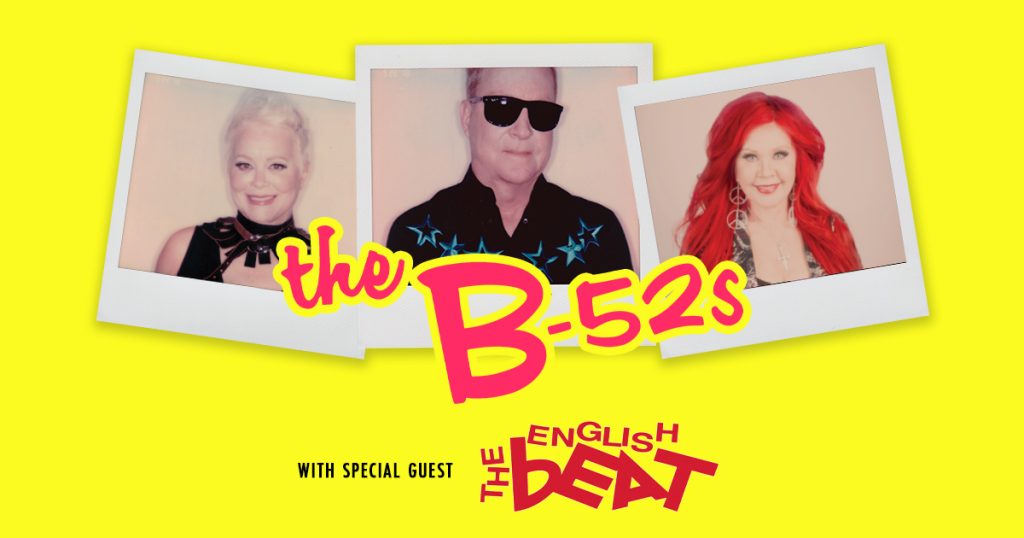
Few bands in American music history have managed to remain as instantly recognizable, culturally influential, joyfully strange, and creatively untouchable as The B-52s. Across more than four decades, the group transformed itself from a quirky underground new-wave phenomenon into one of the most beloved and enduring live acts in modern music, creating a catalog that not only survived changing eras, formats, and trends, but somehow became even more culturally relevant as generations continued discovering their sound. Now, as The B-52s prepare to arrive in New Jersey on Saturday, July 11 at 7 PM alongside special guests The English Beat, audiences are preparing for far more than a nostalgia concert. They are preparing for a full-scale collision between post-punk history, dance-floor liberation, alternative culture, theatrical performance, and one of the most joyous live music experiences ever created.
The upcoming performance also continues the rapid emergence of ParkStage as one of the Northeast’s most ambitious new outdoor entertainment destinations. With an increasingly impressive lineup spanning jam bands, legacy rock icons, alternative pioneers, orchestral productions, Americana performers, and large-scale cultural events, the venue is quickly positioning itself not merely as another seasonal concert site, but as a major regional entertainment platform capable of drawing audiences from throughout New Jersey, New York, and Philadelphia.
The B-52s fit that vision perfectly.
Very few bands possess a catalog capable of instantly transforming an outdoor venue into an enormous communal celebration the moment the opening notes begin. Songs like “Love Shack,” “Roam,” “Rock Lobster,” and “Private Idaho” have transcended radio hits to become permanent pieces of American pop culture itself. Their music exists simultaneously as dance music, party music, underground art-pop experimentation, queer cultural history, college-radio mythology, and mainstream pop success all operating together at once.
That duality is precisely why The B-52s remain so important.
Long before alternative music became commercially dominant, the band carved out a completely original identity by refusing to follow traditional rock-and-roll expectations. Emerging from Athens, Georgia during the late 1970s, The B-52s built their sound around surf guitar textures, punk energy, vintage dance rhythms, camp aesthetics, science-fiction weirdness, avant-garde humor, and fearless theatricality. At a time when much of rock music still operated within rigid masculine frameworks, The B-52s introduced something radically different — colorful, playful, danceable, eccentric, self-aware, and deeply inclusive.
Their impact on alternative culture became enormous.
Artists spanning generations and genres continue citing the band as a foundational influence, including Madonna, Lady Gaga, Arcade Fire, James Murphy, Michael Stipe, and countless others who absorbed the group’s willingness to blur the lines between performance art, pop music, underground culture, and mass entertainment. Their influence extends far beyond music itself into fashion, nightlife aesthetics, queer visibility, visual presentation, and the broader evolution of alternative culture throughout the past four decades.
Importantly, however, The B-52s never lost their sense of fun.
That may ultimately explain why the band continues resonating across generations in ways many of their contemporaries do not. Their music invites participation rather than distance. The concerts are celebrations. The songs encourage movement, absurdity, dancing, joy, and emotional release rather than self-serious performance mythology. Even during periods of tragedy and transition, the band consistently preserved that spirit.
The story of The B-52s cannot be told without acknowledging both triumph and loss.
Following the devastating death of founding guitarist Ricky Wilson in 1985, many assumed the group would disappear entirely. Instead, Keith Strickland stepped into an expanded creative role, helping guide the band through one of the most remarkable reinventions in pop music history. The result became 1989’s “Cosmic Thing,” the album that elevated The B-52s from beloved cult innovators into massive global stars.
The success was extraordinary.
“Love Shack” exploded into one of the defining songs of its era, while “Roam” showcased the band’s melodic sophistication and emotional warmth. “Cosmic Thing” ultimately sold more than five million copies and permanently secured The B-52s’ place inside the upper tier of American popular music history. Yet even during their commercial peak, the band retained the eccentric personality and artistic individuality that made them unique from the beginning.
That originality remains striking today.
Modern pop culture increasingly operates through repetition, algorithmic familiarity, and trend replication. The B-52s, by contrast, still feel impossible to duplicate. Their music sounds like nobody else. Their visual identity remains unmistakable. Their concerts still function like giant surrealist dance parties where camp, punk, disco, surf rock, and alternative culture all coexist simultaneously.
For New Jersey audiences, the ParkStage performance arrives at an especially important moment within the region’s evolving live music landscape.
Outdoor summer concerts throughout New Jersey have expanded dramatically in scale and ambition over the past several years as venues increasingly compete to attract major national acts capable of drawing multi-generational audiences. The B-52s are uniquely suited for that environment because their fan base stretches across decades, demographics, and musical subcultures. Original fans who discovered the band through underground new-wave scenes now attend alongside younger audiences who encountered the music through streaming platforms, television, film, TikTok culture, or inherited family playlists.
That cross-generational power matters enormously in today’s entertainment economy.
Legacy artists increasingly survive not simply because audiences remember them, but because the music continues functioning culturally long after its original release. The B-52s remain deeply embedded within everyday American entertainment culture. Their songs still appear in films, television shows, commercials, sporting events, streaming playlists, dance clubs, and viral internet culture. Few bands from their era continue generating that level of broad cultural familiarity.
The addition of The English Beat further strengthens the event’s significance.
As one of the defining acts of the British ska and new-wave explosion, The English Beat helped shape the sound of alternative dance music during the same cultural period The B-52s were redefining American post-punk. Their blend of ska rhythms, punk urgency, political commentary, and infectious melodic energy helped influence generations of artists spanning alternative rock, ska-punk, dance music, and indie pop.
Together, the pairing creates a lineup deeply connected to one of the most creatively explosive eras in modern music history.
The late 1970s and early 1980s represented a period when genre boundaries collapsed, underground culture exploded into the mainstream, and artists aggressively experimented with identity, sound, visual presentation, and performance structure. Both The B-52s and The English Beat emerged from that cultural moment while helping shape it directly.
Now, decades later, those songs continue filling massive venues because the emotional energy behind them never disappeared.
That emotional connection becomes especially powerful within live settings.
The B-52s concerts have long operated less like traditional rock performances and more like giant celebrations of communal freedom. Audiences dance constantly. Costumes appear throughout the crowd. Multiple generations sing every lyric together. The atmosphere becomes simultaneously nostalgic and immediate, creating the rare feeling that music from entirely different eras is somehow happening in the present tense.
As ParkStage continues building its identity through increasingly ambitious programming, hosting artists like The B-52s also reinforces New Jersey’s growing importance within the Northeast’s competitive entertainment corridor. The region continues positioning itself as a destination capable of attracting world-class touring productions while offering large-scale outdoor experiences that rival far more established summer venues throughout New York and Pennsylvania.
For one July night, however, the focus will not be on industry strategy, venue economics, or touring infrastructure.
It will be on dancing.
It will be on celebration.
It will be on one of the most influential and beloved bands in alternative music history bringing decades of joy, weirdness, rhythm, theatricality, and cosmic energy back to a New Jersey audience ready to turn ParkStage into the biggest dance floor of the summer.
And when “Love Shack” finally begins echoing across the crowd, nobody is going to stay seated for very long.






